
Wood rot in crawl spaces is caused by persistent moisture exposure that breaks down the cellulose structure of floor joists, beams, and sill plates. Fungal decay requires humidity above approximately 19% wood moisture content to activate. Crawl space encapsulation removes the ground moisture and humid air that create those conditions, effectively stopping the rot cycle at its source. In cases where rot has already begun, structural repairs to affected joists and beams are completed before encapsulation to restore integrity.
What Crawl Space Wood Rot Is and What It Attacks
Wood rot is fungal decay. Specific species of fungi colonize damp wood and consume the cellulose and lignin that give the wood its structural strength. The wood softens, discolors, and eventually crumbles. The process does not stop on its own as long as moisture conditions support it.
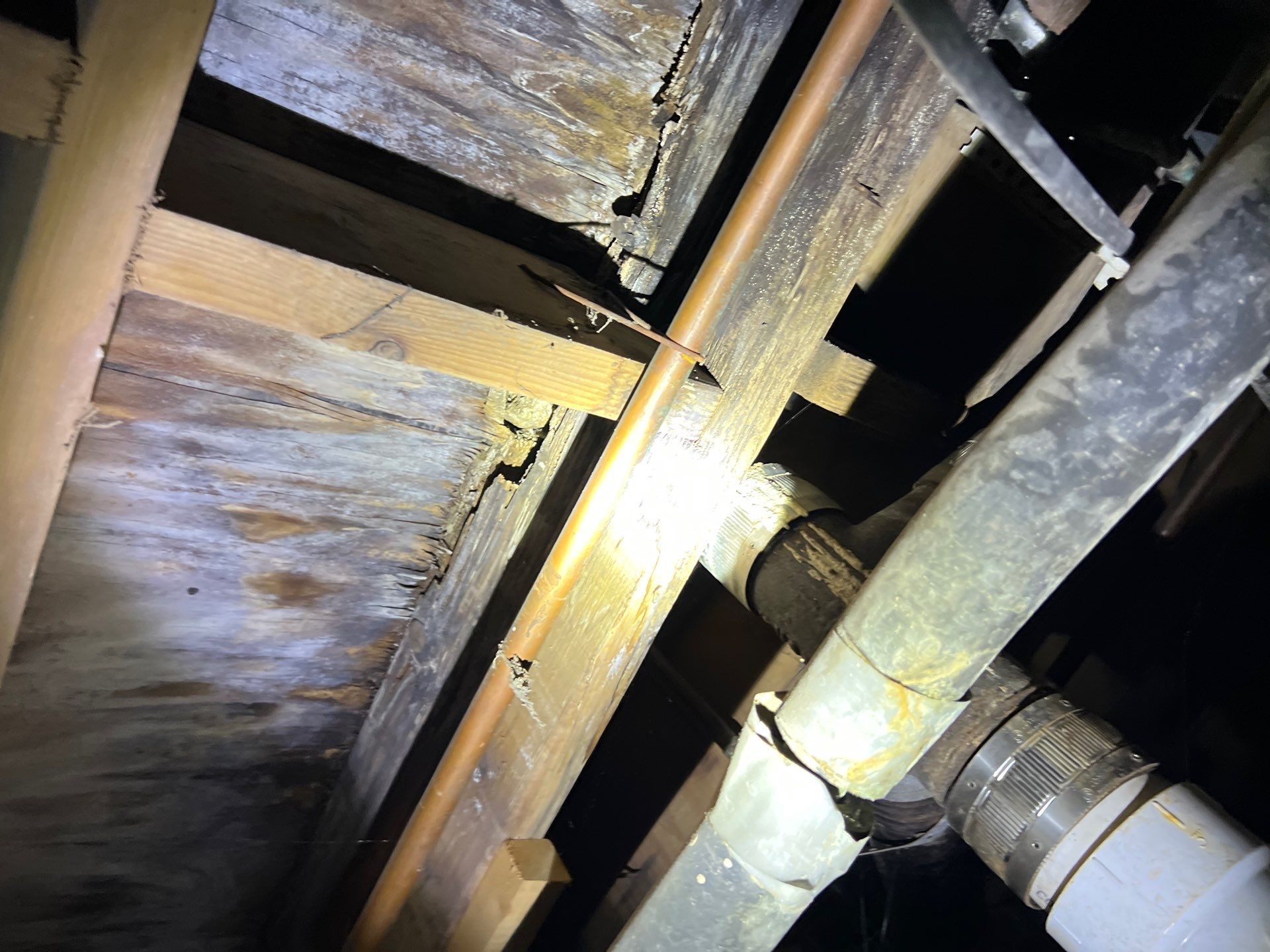
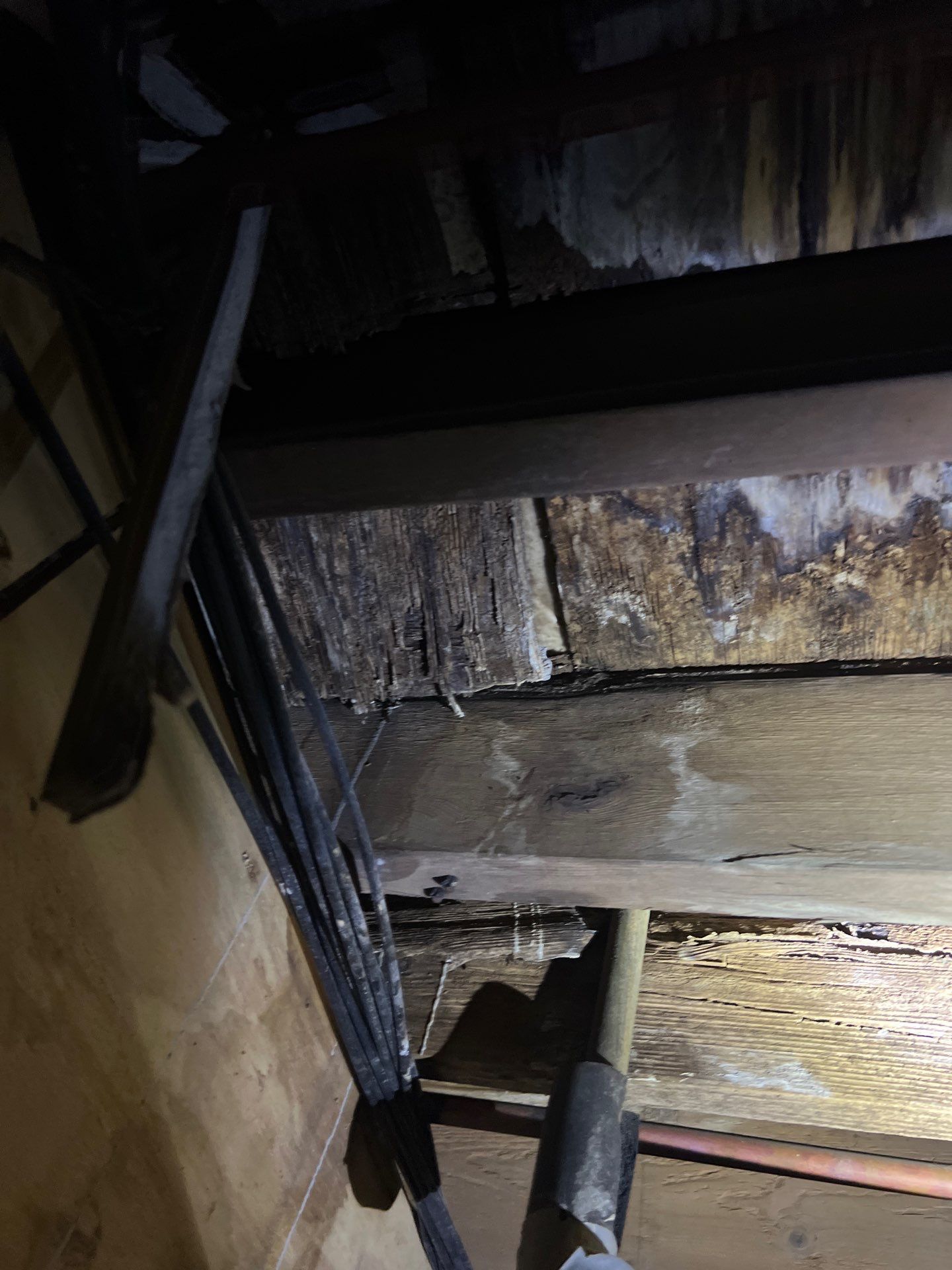
In a crawl space, rot targets the structural components closest to the ground and most exposed to humid air.
Floor joists run across the length of your crawl space and bear the load of everything above them. When they soften from fungal decay, floors above begin to flex, sag, or feel springy underfoot.
Beams and girders carry the weight of the floor joists themselves. Rot in a main beam represents a serious structural threat that extends across a wide section of the home.
Sill plates sit directly on the foundation wall and connect the framing to the structure below. They are in constant contact with the foundation, which draws ground moisture upward. Sill plate rot is common in older homes and often goes undetected until an inspection reveals soft, discolored wood at the perimeter.
Subfloor sheathing lies directly above the joists and can absorb moisture from below, leading to delamination, softening, and rot from the underside up.
The Two Types of Wood Rot and How Moisture Triggers Both
Not all wood rot looks or behaves the same way. Two primary types affect crawl space framing, and both require moisture to establish and spread.
Wet rot develops when wood absorbs water directly and stays saturated. The wood darkens, feels soft and spongy, and may have a musty odor. Wet rot is most common in areas with direct water contact, such as near foundation leaks, plumbing penetrations, or areas where condensation drips onto framing. The USDA Forest Service Wood Handbook identifies wet rot fungi as particularly active once wood moisture content exceeds 28 percent, though damage begins at lower levels with sustained exposure.
Dry rot is a misleading name. It does not occur in truly dry wood. Dry rot fungi (most commonly Serpula lacrymans) colonize wood at lower moisture levels than wet rot requires, typically at wood moisture content above 19 percent, and they spread aggressively once established. Dry rot damage produces a characteristic pattern of deep cracks across and along the grain, leaving wood that looks dry and brittle but has lost most of its load-bearing capacity. Dry rot can travel across non-wood surfaces and through masonry to reach new wood, which makes it particularly destructive in enclosed crawl space environments.
Both types share the same prevention strategy: keep wood moisture content below the threshold that allows fungal growth to activate.
Alabama Crawl Space Conditions That Accelerate Wood Rot
Alabama's climate creates crawl space conditions that push wood moisture content toward dangerous levels year-round.
Soil moisture. Alabama receives significant annual rainfall distributed across all four seasons. The soil beneath crawl spaces holds and releases water continuously. Without a vapor barrier, that moisture evaporates upward through the soil and into the crawl space air, raising relative humidity and saturating any wood surface it contacts.
Persistent humidity. Alabama's average relative humidity exceeds 70 percent for most of the year. Humid outdoor air that enters through crawl space vents carries moisture directly into contact with framing. In the summer months, warm moist air entering a cooler crawl space condenses on wood surfaces, adding liquid water on top of the ongoing vapor load.
Poor or absent ventilation. Older crawl space designs relied on foundation vents to allow air exchange. Research has consistently shown that in humid climates, vented crawl spaces import more moisture than they expel. The Building Science Corporation's analysis of crawl space moisture confirms that vented crawl spaces in the Southeast perform worse than sealed ones. Ventilation alone does not solve the moisture problem in Alabama's climate.
Organic debris and standing water. Crawl spaces that were never properly finished often contain wood scraps, cardboard, or organic material left from construction. These materials hold moisture and provide additional food sources for rot fungi. Any history of standing water in the crawl space, whether from plumbing failures, surface drainage, or a high water table, accelerates the conditions that support rot.
How Quickly Wood Rot Progresses and When to Act
Wood rot does not announce itself. Damage accumulates slowly and invisibly until it reaches the point of structural concern. Most homeowners do not discover crawl space rot until a floor inspection reveals it, or until flooring above begins to show signs of deflection.
At wood moisture content above 19 percent, conditions support fungal colonization. Once established, rot fungi consume wood continuously as long as moisture conditions support them. Depending on the species of fungus present and the moisture level, wood can lose meaningful structural capacity within one to three years of initial colonization.
IRC Section R317 requires that wood used in applications with potential moisture exposure meet specific moisture content standards. Framing lumber exposed to persistent humidity over time may eventually fall outside those standards, affecting both structural integrity and insurability.
Acting before rot is visible is the correct approach. Waiting until floor deflection or soft spots are noticeable above the crawl space means significant structural damage has already occurred.
How Crawl Space Encapsulation Stops Wood Rot at the Source
Encapsulation addresses wood rot by eliminating the moisture conditions that allow fungal growth to begin and continue.
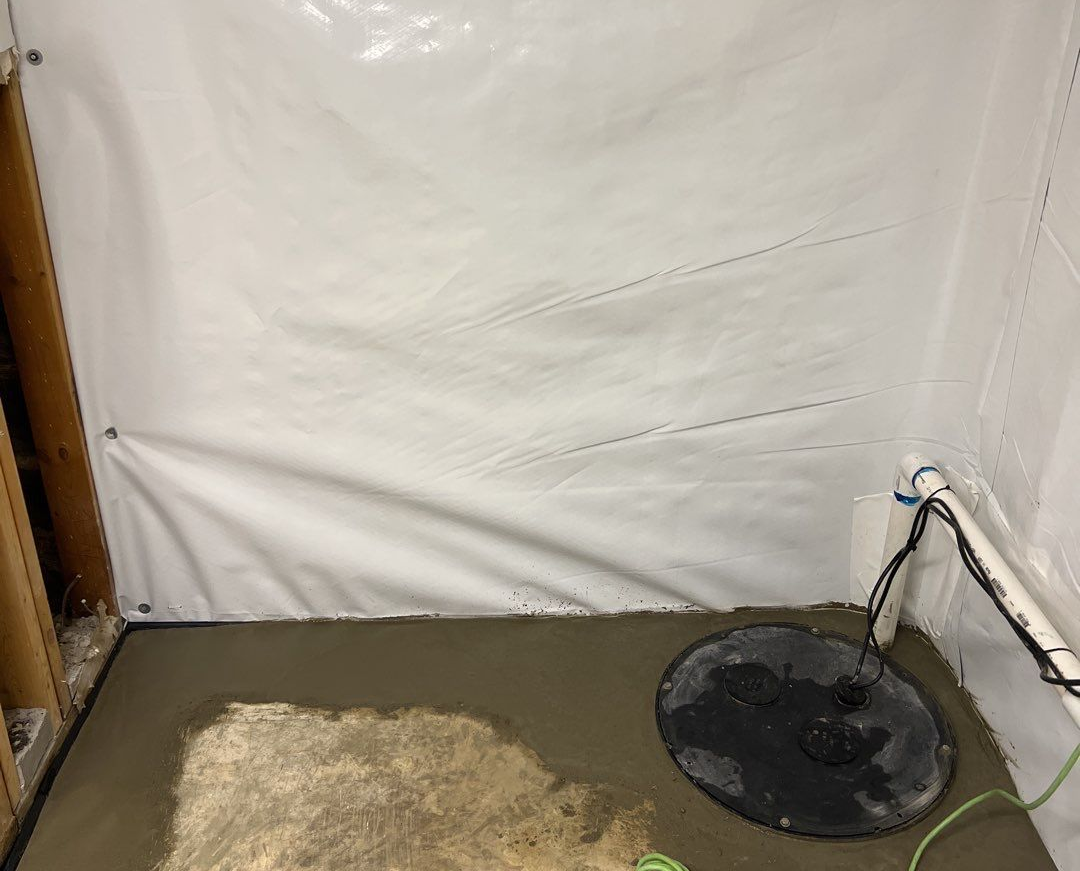
A professional-grade vapor barrier installed across the floor and up the walls of the crawl space blocks ground moisture from evaporating into the air. This removes the primary moisture source that raises crawl space humidity and increases wood moisture content. Without that continuous moisture input, the crawl space air dries out and wood moisture levels drop below the threshold that supports fungal activity.
Sealed seams, fastened wall terminations, and individually wrapped piers eliminate the gaps that allow humid outdoor air to enter and condense on framing. The result is a controlled environment that is isolated from the main moisture sources rather than directly exposed to them.
Once encapsulation brings the crawl space environment under control, humidity stays low and wood moisture content stays below the level that activates decay fungi. Rot fungi already present in the crawl space cannot survive and spread in a dry environment. Active decay stops. The remaining structural wood, if undamaged, is protected going forward.
The Role of a Dehumidifier After Encapsulation
A vapor barrier controls ground moisture. It does not remove humidity already present in the crawl space air or prevent residual moisture from working its way in through imperfect seals and air movement.
A crawl space dehumidifier completes the system. Once the barrier is in place, the dehumidifier holds relative humidity below 60 percent, the level above which mold and rot fungi thrive. The EPA identifies sustained humidity control as essential to preventing fungal growth and structural damage in enclosed spaces.
In Alabama's climate, where outdoor humidity remains high through most of the year, a dehumidifier running year-round is not an optional addition. It is the active component that maintains the dry environment the vapor barrier creates. The two work together: the barrier cuts off the moisture source, and the dehumidifier manages what remains.
Warning Signs That Wood Rot May Already Be Present
Look for these indicators before or during a crawl space inspection:
Above the floor. Soft spots, bouncy or springy floors, doors or windows that have shifted out of square, and floors that slope toward the center of the room all suggest joist or beam compromise beneath.
In the crawl space. Discolored wood ranging from dark brown to gray or black. Wood that crumbles when pressed with a screwdriver or probe. A musty or earthy smell that persists even in dry conditions. Visible fungal growth on framing surfaces. Insulation that has fallen from between joists, which often happens as the nailing surface it was attached to softens.
At the foundation perimeter. Soft or darkened wood at the sill plate. Paint or coating that has bubbled or peeled from framing near the foundation wall.
Any of these signs warrants a professional inspection before deciding on a repair and encapsulation strategy.
What to Do When Wood Rot Is Already Present
Encapsulation alone does not repair structural damage that has already occurred. The correct sequence is inspection first, then repair, then encapsulation.
A crawl space inspection identifies which structural components are compromised and to what degree. Lightly affected wood that has not lost structural capacity may be treated and left in place. Wood that has softened beyond structural usefulness requires replacement or reinforcement.
H2O Waterproofing performs beam and floor joist stabilization as part of a complete crawl space repair process. Damaged joists are sistered with new lumber, compromised beams are reinforced or replaced, and sill plates with significant rot are addressed before the new moisture control system is installed. Starting encapsulation on top of unrepaired rot traps existing damage in place and does not stop the structural degradation that has already begun.
After structural repairs are complete, encapsulation and a dehumidifier protect the repaired framing and the surrounding structure from future moisture exposure. The goal is a crawl space that stays dry enough that rot fungi cannot reactivate. You can see examples of H2O's completed crawl space work in our project portfolio.
Protecting Your Home Before the Floor Tells You There Is a Problem
Crawl space wood rot is a preventable problem when moisture is controlled early. It becomes a costly repair problem when moisture goes unmanaged for years. Encapsulation stops the moisture cycle that drives rot. Structural repairs restore what moisture has already damaged. Together, they return the crawl space to a condition that protects the home above it.
H2O Waterproofing inspects crawl spaces across Alabama, identifies existing rot damage, and installs complete encapsulation systems that keep wood dry going forward. Contact H2O to schedule an inspection and get a clear picture of what your crawl space needs before the floor above starts showing the signs.
References: USDA Forest Service, Wood Handbook: Wood as an Engineering Material; IRC Section R317, Protection Against Decay; EPA, "A Brief Guide to Mold, Moisture, and Your Home"; Building Science Corporation, BSI-115: Crawlspaces, Either In or Out.
Search Post
Recent Posts


Share post