
Alabama averages over 54 inches of rainfall per year. Jefferson, Shelby, Cullman, and Talladega counties receive significant storm events from spring through fall, with isolated severe events capable of dropping 3 to 5 inches of rain in a single afternoon.
Your sump pump is the only active defense between a wet basement and a flooded one. When it fails during a storm, the water does not wait for you to call a contractor. Most homeowners do not think about their sump pump until it stops working and by that point, the damage is already measured in thousands of dollars of water extraction, drywall replacement, and mold remediation.
These are the
six warning signs that tell you your pump is about to fail, before the storm arrives to confirm it.
1. Your Pump Runs Constantly, Even When It Hasn't Rained
A properly functioning sump pump cycles on when water in the pit rises to a set level, evacuates it, and shuts off. The cycle repeats as needed during a rain event and stops when the water clears.
A pump that runs continuously during dry weather, or cycles on and off every few minutes without rain, is working against a condition it should not be fighting. In Alabama, this usually means one of three things: a stuck or misaligned float switch triggering the pump unnecessarily, a groundwater table that has risen and is no longer seasonal, or a pump that has lost enough capacity that it cannot clear the pit before water refills it.
Constant cycling accelerates motor wear. A pump that runs twice as often as intended does not last twice as long it degrades significantly faster. A pump running constantly today is a pump that fails during the next storm.
2. You Hear Grinding, Rattling, or Loud Cycling Noises
Sump pumps should be background noise — a low hum when they activate, nothing when they do not. Abnormal sounds are diagnostic.
Grinding indicates debris in the impeller the rotating component that moves water. Gravel, sediment, and debris from the pit floor work into the impeller housing over time. Grinding under load means the impeller is damaged or obstructed.
Rattling often means a loose motor mount or a pump that has shifted off its seating in the pit. A misaligned pump works harder and wears unevenly.
Knocking or water hammer at the discharge line every time the pump shuts off indicates a check valve failure. The check valve prevents water in the discharge pipe from flowing back into the pit when the pump stops. Without it working correctly, the pump re-evacuates the same water repeatedly, doubling its workload on every cycle.
Any new noise that was not present six months ago is a signal that something has changed inside the pump. Do not ignore it.
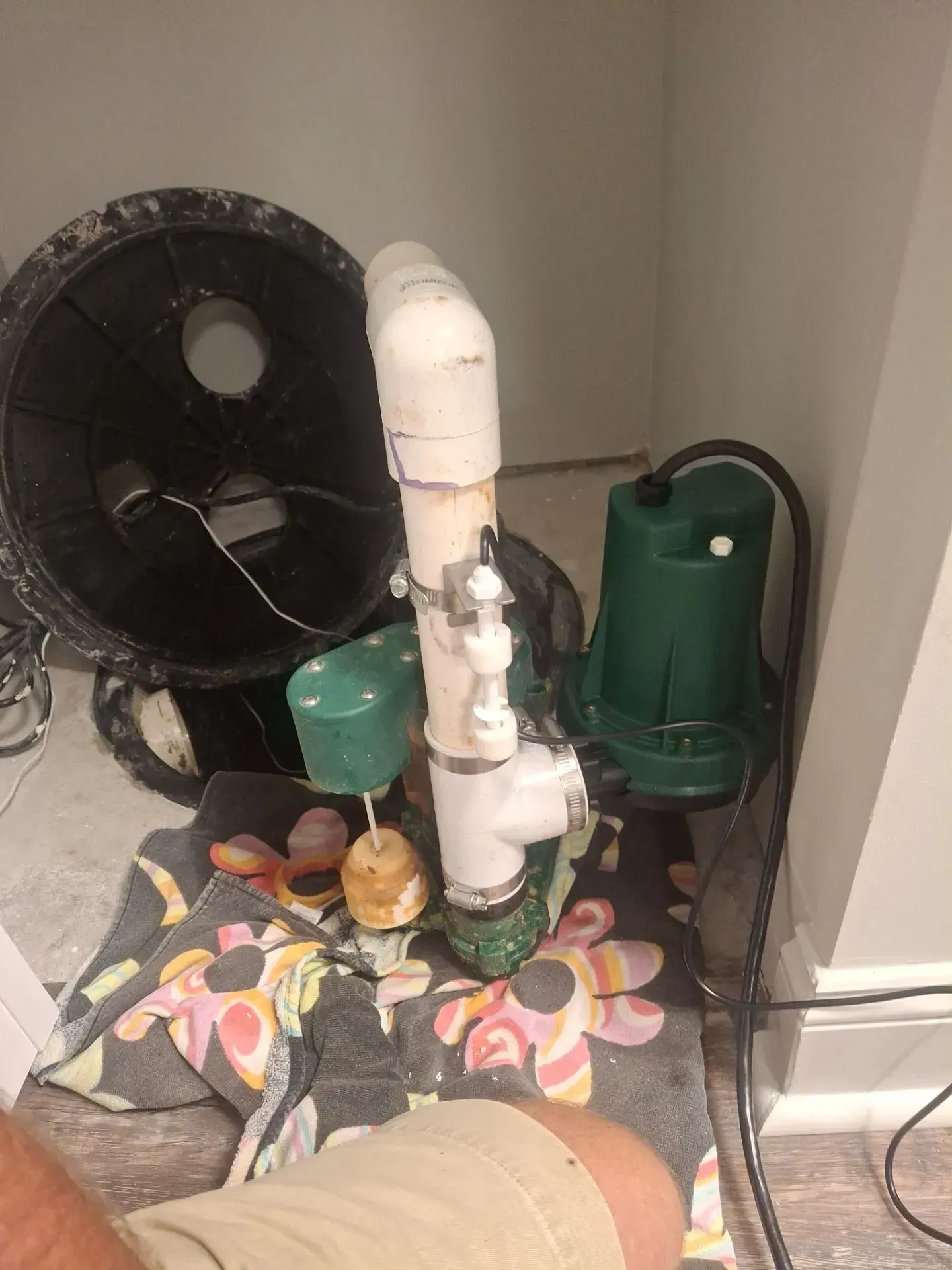
3. Visible Rust, Corrosion, or a Persistent Musty Smell
Surface rust on the pump housing is a cosmetic issue. Rust on fittings, at the check valve, or on the discharge pipe connections is a functional one corrosion at connection points leads to leaks and joint failures.
A musty smell rising from the sump pit means one of two things: water is sitting in the pit longer than it should (indicating slow drainage or reduced pump output), or mold is growing on surfaces inside the pit or in the moisture-laden air around it. Alabama's humidity makes the sump pit area a high-risk zone for mold if drainage slows.
A pump showing corrosion at connection points or paired with a musty smell from the pit is a pump approaching the end of its service life.
4. Water Sits in the Pit Longer Than It Should
his is a simple test you can do yourself. Pour a five-gallon bucket of water into the sump pit and watch what happens.
A healthy pump activates within a few seconds of water reaching the float switch and clears five gallons in under 30 seconds. If the pump hesitates before activating, runs for an unusually long time, or leaves water standing in the pit after it shuts off, the pump is underperforming.
Reduced output is caused by several things: a clogged intake screen drawing in less water per cycle, a worn impeller moving less volume, or a motor that is running slower due to electrical issues or wear. Any of these reduces the pump's ability to handle Alabama's storm rainfall volumes, which can push 1 to 3 gallons per minute into the pit during a heavy event.
A pump that takes 60 seconds to clear 5 gallons in a bucket test will not keep pace with a serious storm.
5. It's Older Than 7 to 10 Years
Most sump pumps have a rated service life of 7 to 10 years under normal operating conditions. In Alabama, where storms are frequent and pump cycles run high from spring through fall, pumps in active use often reach the lower end of that range.
Age is one of the most reliable indicators of impending failure. Pump motors, float switches, and check valves all degrade over time regardless of how well the unit was maintained. A pump that is 8 or 9 years old and has never been replaced is a statistical liability during the next major storm.
If you do not know the age of your pump, check for a manufacture date stamp on the housing or in the installation paperwork. If there is no record, and the pump has been in place since you moved in, assume it is due for evaluation.
H2O Waterproofing installs
USA-assembled sump pump systems with a 5-year warranty. Replacing a pump on your schedule costs a fraction of what water damage costs after a failure.
6. The Power Goes Out and You Have No Backup
This is not a sign of pump failure. It is a gap in your system that Alabama weather guarantees will matter eventually.
Alabama storms that are strong enough to
flood a basement are routinely strong enough to knock out power. Severe thunderstorms, tropical systems pushing inland from the Gulf, and winter ice storms all cause extended outages in Jefferson and Shelby counties. A standard
sump pump that runs on grid power stops working the moment the electricity does which is precisely when rainfall is highest and water is rising fastest in the pit.
A battery backup system activates automatically when primary power is lost and continues pumping throughout the outage. H2O installs combination systems - primary submersible pump plus battery backup unit so both power sources are managed from a single installation. For Alabama homeowners in areas prone to power loss during storms, a backup is not optional equipment. It is the difference between a dry basement and a water claim.
How Long Do Sump Pumps Last in Alabama?
Most residential sump pumps last 7 to 10 years. In Alabama, pump longevity depends on three factors: how often it cycles (homes in low-lying areas or near drainage corridors run more), whether a battery backup shares the load during peak storm periods, and whether annual maintenance has been performed.
Annual maintenance should include cleaning the pit of debris, testing the float switch manually, verifying the check valve is holding, inspecting the discharge line for blockages or freezing (rare in Alabama but possible in north Alabama during severe winter events), and confirming the backup battery holds a charge.
H2O's annual maintenance plan covers sump pump inspection as part of the full-system check.
Frequently Asked Questions
How do I test my sump pump before a storm?
Pour a five-gallon bucket of water directly into the pit and observe the response. The pump should activate within seconds and clear the water in under 30 seconds. Also manually lift the float switch to trigger the pump and confirm it runs. If either test produces a slow response or no response, the pump needs service before the next storm event.
What size sump pump do Alabama homes need?
Most Alabama residential applications require a 1/3 horsepower submersible pump rated at 1,800 to 2,200 gallons per hour. Homes in areas with high groundwater tables, near streams or drainage corridors, or with large basement footprints need higher-capacity units. H2O sizes every pump to the specific water load during the free inspection — not a default specification.
Does a sump pump need a dedicated electrical circuit?
Yes. A sump pump should be on a dedicated 20-amp GFCI-protected circuit. Running a pump on a shared circuit risks tripping the breaker during a storm when other loads are active. If your pump shares a circuit, that is a code and reliability issue worth correcting before the next storm season.
Will my homeowners insurance cover a sump pump failure?
Standard homeowners insurance in Alabama typically does not cover water damage from sump pump failure. A "water backup" or "sump pump failure" rider added to the policy covers this scenario — premiums for the rider are generally low relative to the coverage amount. Confirm rider availability and coverage limits with your insurance agent.
How long does sump pump installation take?
A standard submersible pump replacement takes 2 to 4 hours. A new installation including pit excavation, liner, pump, and discharge line runs 4 to 8 hours for a straightforward application. Battery backup installation alongside a primary pump adds 1 to 2 hours.
Is a water-powered backup different from a battery backup?
Yes. A water-powered backup uses municipal water pressure to operate a secondary pump when power is out, requiring no battery or recharging. They work only on homes with municipal water supply (not well water) and require adequate water pressure. Battery backups work regardless of water source but require periodic battery testing and replacement every 3 to 5 years. H2O recommends the system appropriate for your specific home setup.
H2O Waterproofing Installs and Services Sump Pumps Throughout Alabama
H2O Waterproofing has installed and serviced sump pump systems in Alabama basements and crawl spaces since 2003. USA-assembled systems. 5-year warranty. BBB A+ rated. Free inspections.
Call (205) 956-2426 today to schedule your free sump pump inspection and get ahead of storm season.
Search Post
Recent Posts


Share post