Interior Basement Waterproofing Alabama
Interior basement waterproofing is a permanent drainage system installed inside your foundation that intercepts water before it surfaces on your basement floor and channels it to a sump pump for removal. It is the most common and cost-efficient waterproofing solution for Alabama homes, specifically engineered to manage the hydrostatic pressure generated by Alabama's expansive red clay soil.
H2O Waterproofing has installed interior waterproofing systems throughout Alabama since 2003. Every system carries a fully transferable
lifetime warranty. Every technician brings a minimum of 10 years of hands-on experience. BBB A+ rated.
Call (205) 956-2426 for a free inspection.
Signs Your Basement Needs Interior Waterproofing
Most homeowners call us after they see standing water. But Alabama basements send earlier signals. Interior waterproofing is the solution for any of these conditions:
Water or dampness at the wall-floor joint.
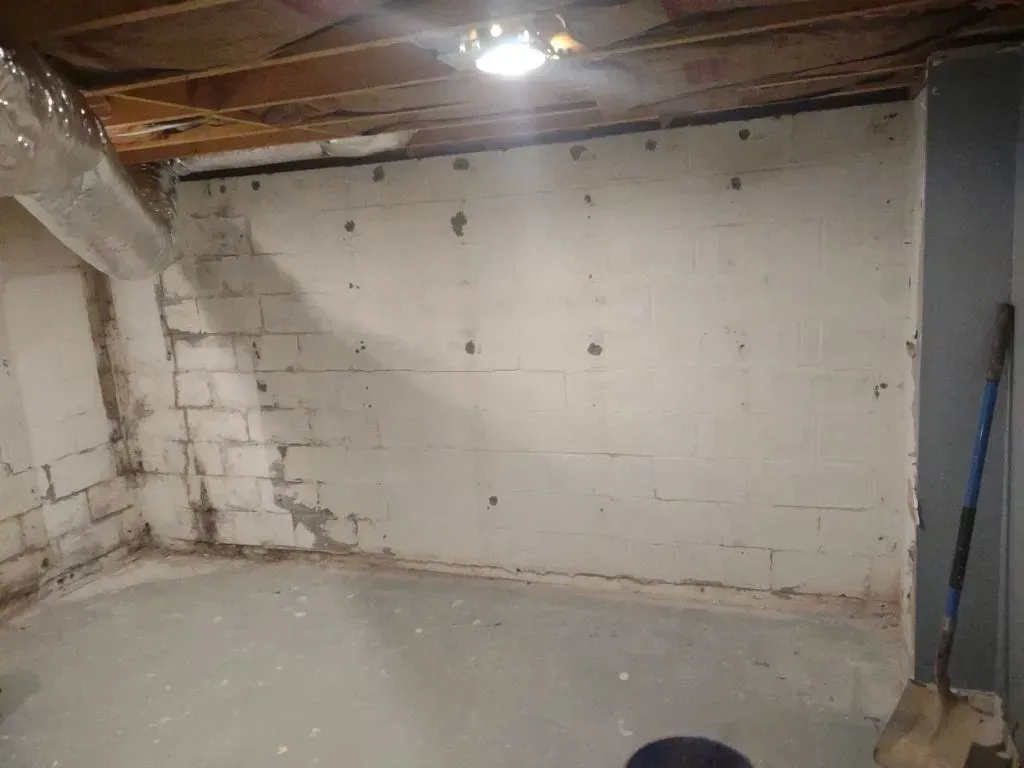
The joint where the foundation wall meets the floor slab is the most common water entry point in Alabama basements. You may see it as a thin wet line after rain, or as chronic dampness that never fully dries. This is hydrostatic pressure forcing water through the junction, regardless of the original construction quality.
White or gray mineral deposits on walls.
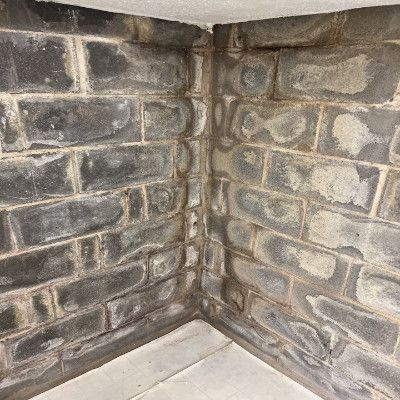
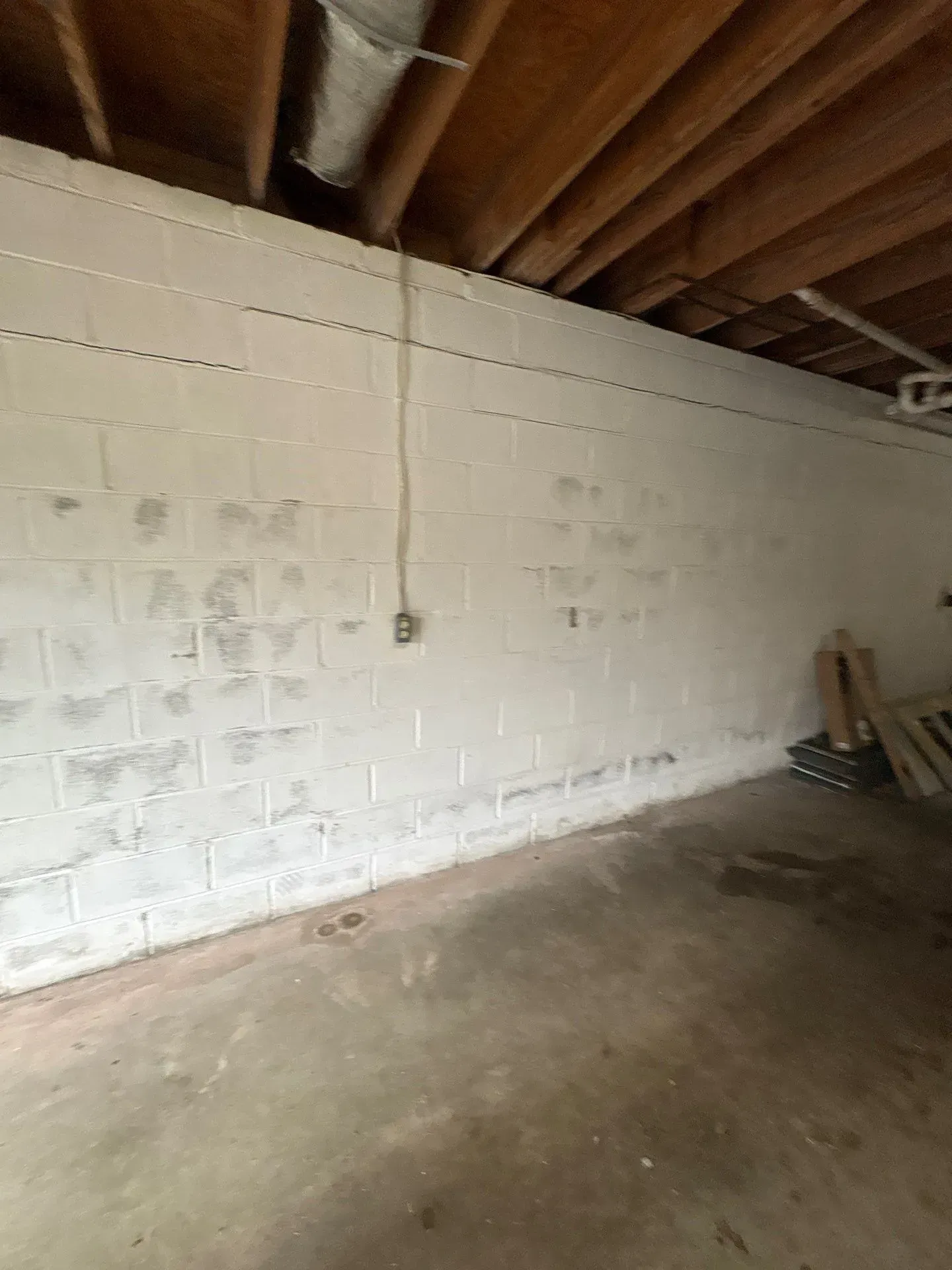
Efflorescence is the chalky, powdery coating that forms when water evaporates through concrete or block and leaves mineral salts behind. It is not a cosmetic issue. It is evidence of active water movement through your foundation wall. Every deposit marks a water pathway.
Musty smell in the basement after rain.
Odor without visible water means moisture is present at a level that promotes mold and mildew growth. Alabama's summer humidity amplifies this. The source is typically moisture migrating through porous block or concrete walls, which interior drainage intercepts before it enters the air space.
Rust stains on the basement floor.
Rust streaks on concrete indicate moisture moving up through the slab from below. This is groundwater rising under hydrostatic pressure. The drainage channel relieves that pressure at the perimeter, reducing upward moisture movement through the floor.
Recurring damp spots in the same locations.
Seasonal dampness that appears after every significant storm, always in the same corner or along the same wall section, follows a consistent water pathway. That pathway does not self-correct. Interior drainage permanently intercepts it.
Water stains or tide marks on block walls.
A horizontal stain line on the lower portion of a basement wall shows the high-water mark from previous intrusion. If the stain is old but the wall remains damp to the touch, active seepage is continuing below the visible mark.
If you see any of these signs, the water problem is established. It will not resolve without a drainage system.
H2O's free inspection
identifies the exact entry point and scopes the correct solution.
How Interior Waterproofing Works
Interior waterproofing does not try to seal water out through the wall. It manages water movement at the foundation level, routing groundwater away before it causes damage.
The Perimeter Drainage Channel
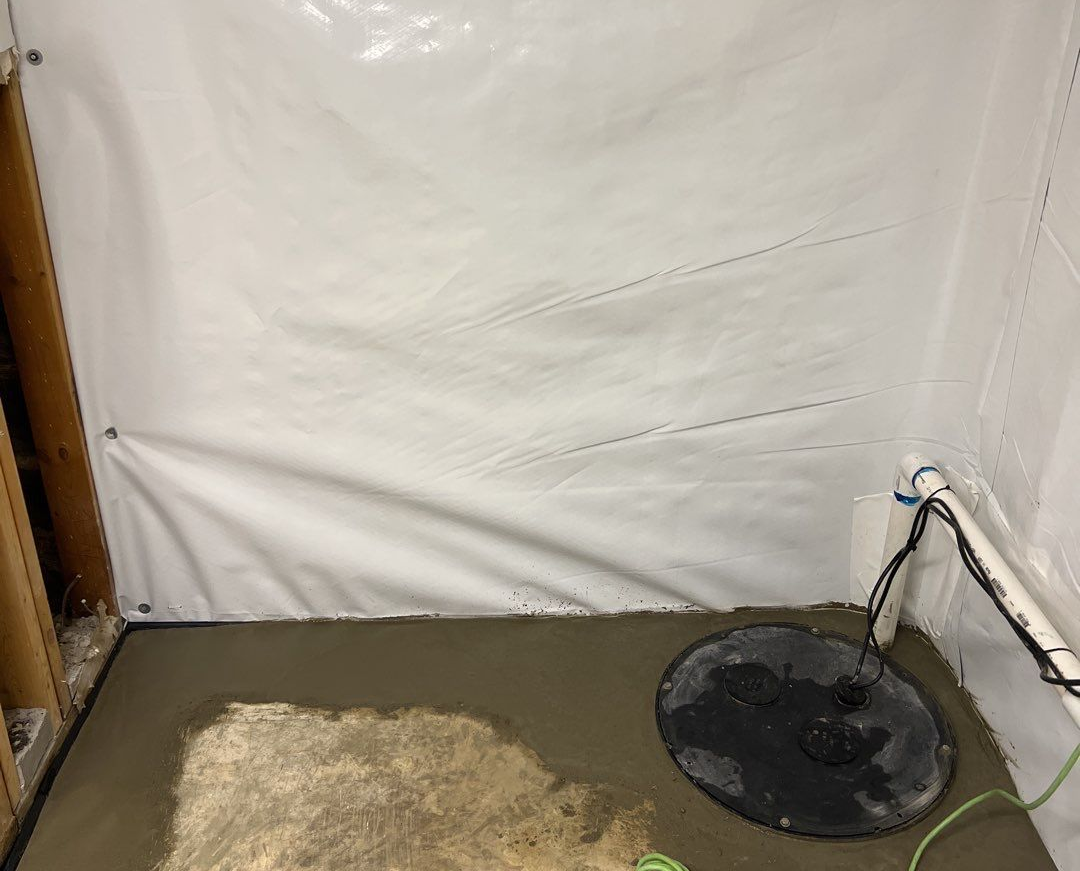
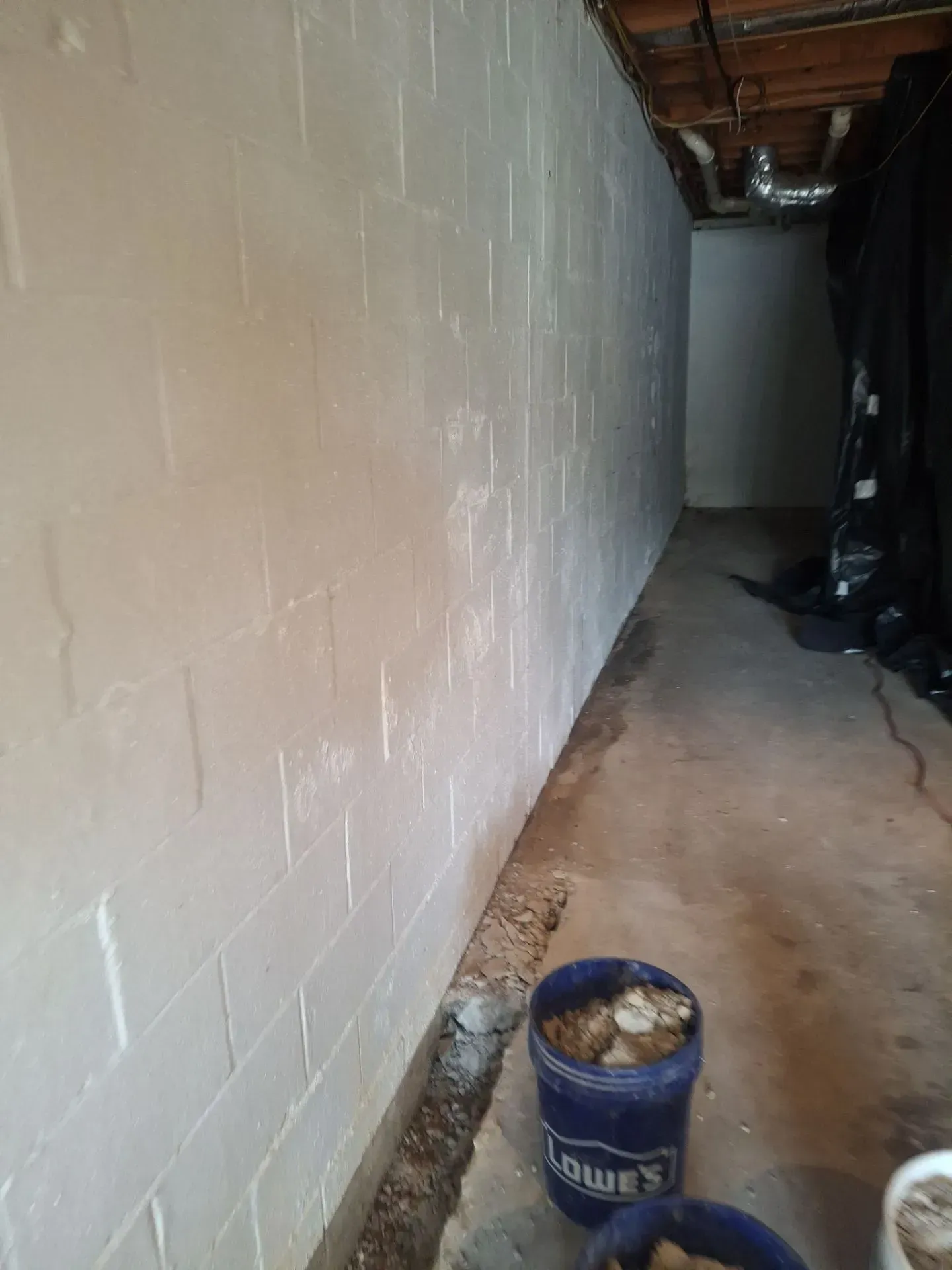
We saw-cut a strip of concrete 6 to 12 inches wide along the interior perimeter of your basement floor, at the base of the foundation wall. We install a rigid drainage pipe in the channel, cover it with clean stone aggregate and a vapor barrier cover. A vapor barrier or rigid wall protection is also applied on the wall below grade to keep the moisture from causing humidity in the basement.
As groundwater pushes through the wall or rises through the wall-floor joint, it enters the drainage channel rather than spreading across your floor.
For homes with concrete block walls, we drill small weep holes near the bottom of each block course. Concrete blocks are hollow, and water often becomes trapped inside them before it ever reaches the floor. The weep holes give that trapped water a direct path into the drainage channel, preventing it from building up pressure inside the wall.
The channel runs the perimeter of the basement and routes all collected water to a single discharge point at the sump pump basin or gravity discharge when possible.
The Sump Pump
Water collected by the drainage channel flows into a sump basin installed in a low point of the basement floor.
A high-capacity
sump pump activates automatically when water reaches a set level in the basin, discharging it through a pipe to the exterior of the home and away from the foundation.
H2O sizes every sump pump to Alabama's rainfall volumes. A standard residential pump handles the load from typical storm events. For homes in high-water-table areas or near drainage corridors, we specify higher-capacity units with battery backup to maintain operation during power outages.
The Concrete Cover
After the drainage channel and pump are installed, we pour new concrete over the channel. The finished floor looks and functions like the original. There is no visible evidence of the system, and the floor remains fully usable.
All work is performed from inside the
basement. No exterior excavation. No disruption to your yard, landscaping, or neighboring property.
Interior vs. Exterior Waterproofing:
Which One Does Your Home Need?
Both systems permanently address basement water intrusion. The right choice depends on the source of your water problem and the condition of your foundation walls.
| Factor | Interior Waterproofing | Exterior Waterproofing |
|---|---|---|
| Typical cost | $4,500 - $8,000 | $8,000 - $15,000 |
| Timeline | 1-2 days | 2-5 days |
| Excavation required | No | Yes |
| Best for | Hydrostatic seepage, wall-floor joint, porous walls | Active structural cracks, high water volume |
| Yard disruption | None | Yes |
| Warranty | Lifetime | Lifetime |
Interior waterproofing is the right system when:
- Water enters through the wall-floor joint or through porous concrete and block walls
- The source is hydrostatic pressure from Alabama's red clay soil
- The foundation walls are structurally sound (no active inward bowing or displacement)
- Yard access is limited or excavation is not practical
Exterior waterproofing is the right system when:
- Foundation walls have active structural cracks or horizontal cracking indicating inward pressure
- Water volume is too high for interior drainage alone to manage
- The home is newly under construction or a full excavation is already planned
H2O diagnoses which system your home requires during the free inspection. In some cases, a combination of both systems is the permanent solution.
Not sure which system you need? H2O's free inspection takes about an hour and gives you a written diagnosis with no obligation.
Why
Interior Waterproofing Works in Alabama's Climate
Alabama averages over 54 inches of rainfall per year. Jefferson County and Shelby County's red clay soil absorbs that water and holds it against your foundation with sustained hydrostatic pressure for days after every significant storm. That sustained pressure is what forces water through concrete, block, and mortar joints.
Sealants and coatings applied to the interior wall surface attempt to block that pressure at the wall face. In Alabama's conditions, the pressure eventually wins. The sealant cracks, debonds, or forces water through a new path. Interior waterproofing takes a different approach: instead of blocking pressure, it relieves pressure by giving water a managed path to travel. Water follows the drainage channel to the sump pump rather than spreading across the floor or pushing through the wall surface.
This is why interior drainage systems have a longer service life than surface sealants in high-pressure clay soil environments. The system works with the water rather than against it.
What Interior
Waterproofing Fixes
Interior waterproofing addresses the following conditions permanently:
Seepage at the wall-floor joint.
The joint where the foundation wall meets the floor slab is the most common water entry point in Alabama basements. Hydrostatic pressure forces water through this joint regardless of how tight the original construction was. The drainage channel is installed directly at this junction.
Water through porous walls.
Concrete block and older poured concrete foundations absorb groundwater over time. Interior drainage intercepts this moisture as it passes through the wall and before it enters the living space.
Cracks in the foundation floor.
Hairline and larger cracks in basement floor slabs allow water to rise from below under hydrostatic pressure. The drainage channel relieves that pressure along the perimeter, reducing upward water movement through floor cracks.
Efflorescence and mineral staining.
White mineral deposits on basement walls confirm active water movement through the foundation. Interior waterproofing stops the water infiltration driving efflorescence.
Recurring wet spots and damp patches.
Seasonal or storm-triggered dampness that appears in the same locations repeatedly indicates a consistent water pathway. Interior drainage permanently intercepts that pathway.
Elevated basement humidity.
Some basements continue to have high humidity after active seepage is stopped, particularly in Alabama's summer months. H2O installs whole-basement dehumidifiers as part of a complete moisture control system when humidity persists after drainage installation.
Interior Waterproofing Cost in Alabama
Most residential interior waterproofing projects in Alabama run between $4,500 and $8,000. Cost is determined by three factors: the linear footage of drainage channel installed (which follows your foundation perimeter), the sump pump capacity specified for your home's water load, and whether any secondary work is needed before installation (crack injection, floor prep, or mold remediation).
H2O provides free, itemized estimates with no obligation. You know the full cost before any work begins.
Financing is available.
Our 5-Step Installation Process
Step 1 - Free Inspection
An H2O technician visits your home, inspects the basement, and identifies the water source, entry points, and any structural considerations. The inspection takes about an hour and carries no cost or obligation.
Step 2: Diagnosis
We confirm interior waterproofing is the appropriate system for your home's specific conditions. If
exterior work or supplemental crack injection is needed first, we document that clearly.
Step 3: Custom System Design.
We design your drainage channel layout,
sump pump specification, and discharge routing based on your home's foundation footprint and water load.
Step 4: Installation.
Our crew cuts the perimeter channel, installs drainage pipe and stone, sets the sump basin, installs the pump, runs the discharge line, and pours new concrete over the channel. Most Alabama residential jobs complete in one to two days.
Step 5: Lifetime Warranty
Every H2O interior waterproofing installation carries a fully transferable lifetime warranty. If water returns, we return at no charge. The warranty transfers to new owners when the home is sold.
Get in touch for a professional estimate and expert guidance. Call Call (205) 956-2426 for a free inspection or schedule online.
Frequently Asked Questions
Answers provided by Eric Hamilton, owner of H2O Waterproofing, with 23+ years of waterproofing experience in Jefferson and Shelby County, Alabama.
What are the signs my basement needs interior waterproofing?
The clearest signs are: water or a wet line at the wall-floor joint after rain, white mineral deposits (efflorescence) on block or concrete walls, a musty odor in the basement that persists after storms, rust stains on the basement floor from moisture rising through the slab, and recurring damp spots in the same locations after every significant rainfall.
Any one of these conditions indicates an established water pathway. Multiple conditions indicate sustained hydrostatic pressure from Alabama's clay soil. None of them resolve without a drainage system.
What is interior basement waterproofing?
Interior basement waterproofing is a permanent drainage system installed inside the basement perimeter. A channel is cut along the base of the foundation wall, a drainage pipe is set in the channel, and the collected water routes to a sump pump for automatic removal.
The system manages hydrostatic pressure by giving groundwater a controlled path rather than trying to block it at the wall surface. Most Alabama residential installations complete in one to two days.
How long does interior waterproofing last?
H2O Waterproofing interior systems carry a Full Non-Expiring Lifetime Warranty. The physical components, perimeter drainage channel and sump pump, typically last 20 to 30 years or more.
Sump pump motors are the only component that requires periodic replacement, typically every 7 to 10 years depending on run time. H2O's maintenance plan includes annual pump inspection.
Is interior waterproofing better than exterior in Alabama?
For most Alabama homes, yes. Interior waterproofing is the correct system when water enters through hydrostatic seepage at the wall-floor joint or through porous foundation walls, which describes the majority of basement water problems in red clay soil states. It costs less, installs faster, requires no excavation, and creates no disruption to landscaping.
Exterior waterproofing is the right choice when foundation walls have active structural cracks or when water volume exceeds interior drainage capacity. H2O's free inspection determines which system your home requires.
Does interior waterproofing prevent mold?
Yes, when water is the source of the mold. Interior waterproofing stops the moisture infiltration that creates conditions for mold growth in basements. Existing mold present before installation requires professional remediation before the waterproofing system is installed. H2O provides mold remediation as part of the same project when needed.
Will interior waterproofing work if my foundation walls are bowing?
Interior drainage alone is not the solution for bowing foundation walls. Horizontal wall cracks and inward bowing indicate active structural movement from soil pressure and require wall stabilization first, typically carbon fiber straps or wall anchors.
Once the structural issue is stabilized, interior waterproofing addresses any remaining water infiltration. H2O diagnoses both conditions during the free inspection and scopes the correct combination of repairs.
How much does interior waterproofing cost in Alabama?
Most Alabama residential interior waterproofing projects run between $4,500 and $8,000. The primary cost variable is linear footage of drainage channel, which follows your foundation perimeter.
Homes with larger footprints or those requiring supplemental work (crack injection, mold remediation) run toward the higher end of that range. H2O provides free, itemized estimates. Financing is available.
Call (205) 956-2426.
Does the interior waterproofing system require maintenance?
The drainage channel itself requires no maintenance. The sump pump is the only active component and should be inspected annually to confirm the float switch, check valve, and discharge line are functioning correctly.
H2O offers an annual maintenance plan that covers this inspection plus a full system check. Battery-backup sump pumps should have their batteries tested or replaced every two to three years.

Protect your home
Get in touch today to discuss your project. We will be happy to answer your questions and provide a no-obligation FREE estimate.
4.9 / 5 ★★★★★
CLIENT SATISFACTION
What Our Customers Say






Proudly Serving the Birmingham Metro Area
H2O Waterproofing serves these Birmingham-area communities:
Our Services
Our TESTIMONIALS
What Alabama Homeowners Say About
H2O Waterproofing
HERE'S WHAT MAKES US DIFFERENT!
We offer a specialized “Peace of Mind” Maintenance Program designed for Preventative care and maintenance on all products installed by H2O Waterproofing, LLC.
H2O technicians are not salesmen. They are highly trained professionals, with a minimum of 10 years of waterproofing experience.
Since 2003, H2O Waterproofing has been Alabama's most trusted waterproofing and foundation repair contractor.
We pride ourselves with providing our customers with the best customer experience, one waterproofing job at a time.
Check our blog: