Exterior Basement Waterproofing Alabama
Exterior basement waterproofing is a permanent barrier system applied directly to the outside of your foundation walls. It stops groundwater at the source, before it contacts your foundation, by excavating to the footer, applying a waterproofing membrane to the exposed wall surface, and installing a drainage board and perimeter drain to redirect water away from the foundation permanently.
Exterior waterproofing is the correct solution when interior drainage alone is not enough: specifically, when foundation walls have active structural cracks, horizontal cracking from soil pressure, or water volume that exceeds what interior drainage can manage.
H2O Waterproofing has installed exterior systems throughout Alabama since 2003 using GMX Ultra-Shield polymer-modified asphalt membrane, a professional-grade product that delivers up to eight times greater hydrostatic head resistance than standard asphalt emulsion products. Every installation carries a fully transferable 25 year manufacturers warranty. Every technician brings a minimum of 10 years of hands-on experience. BBB A+ rated.
Call
(205) 956-2426 for a free inspection.
Signs Your Foundation Needs Exterior Waterproofing
Not every wet basement needs exterior work. Interior drainage handles most Alabama basement water problems. Exterior waterproofing is the right call when you see these specific conditions:
Horizontal cracks in the foundation wall.
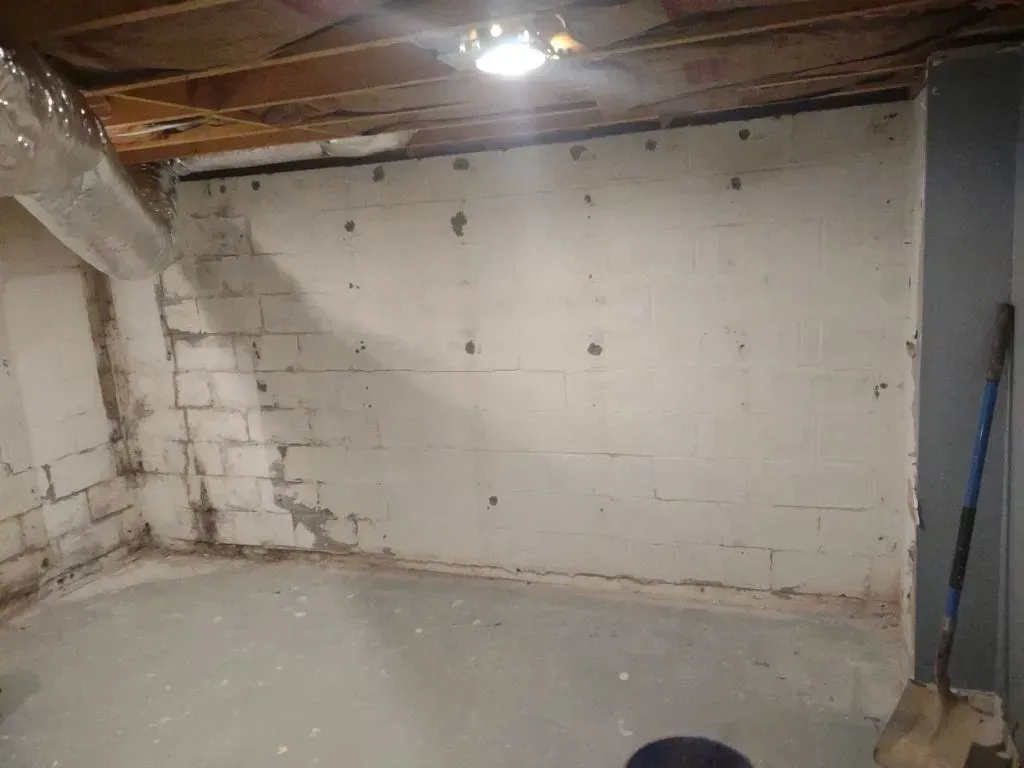
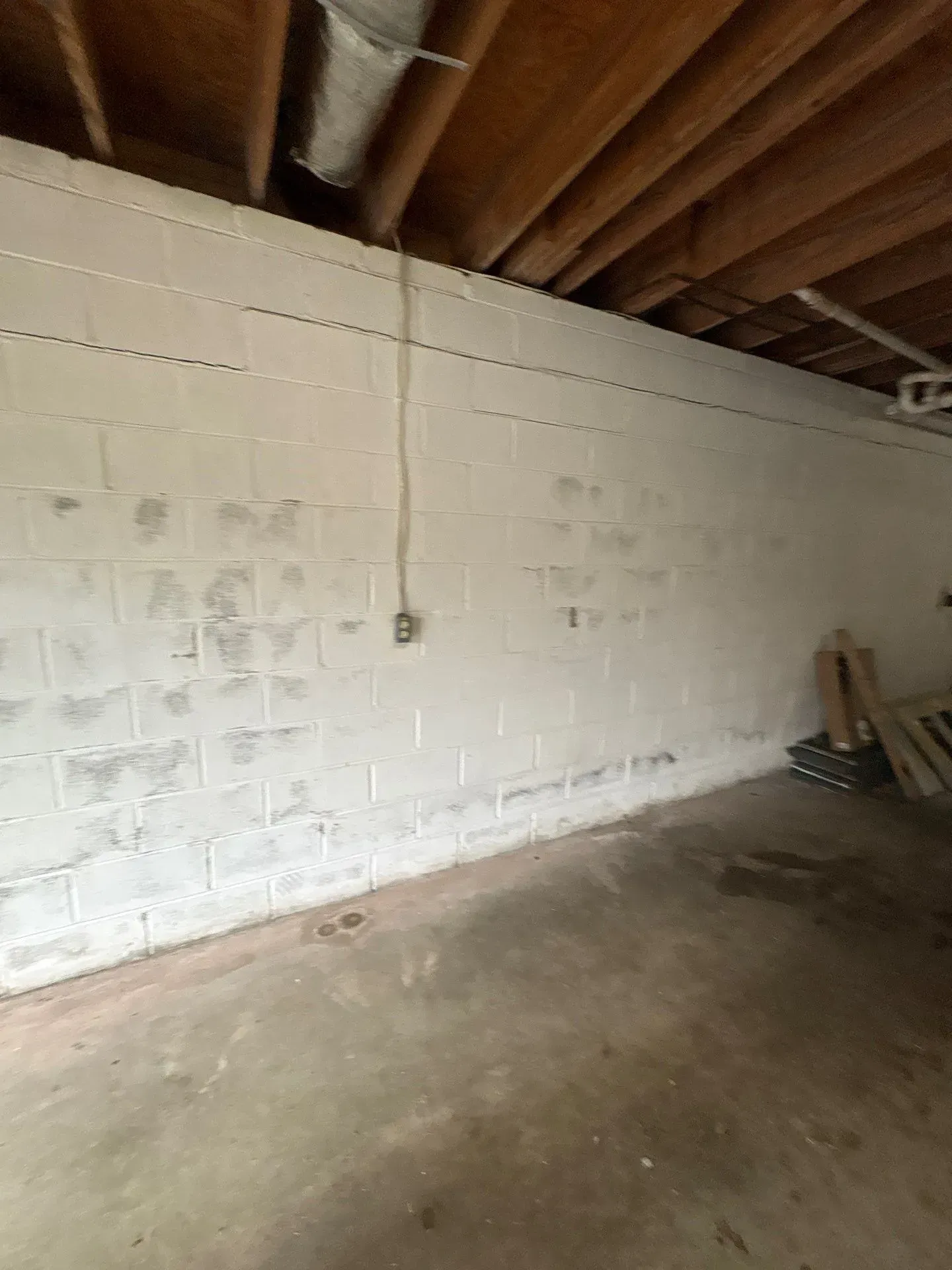
Horizontal cracking is the most critical warning sign in Alabama foundations. Unlike vertical or diagonal cracks, which often result from settling, horizontal cracks indicate active inward soil pressure against the wall. Alabama's red clay soil expands when saturated and pushes laterally against foundation walls.
Left unaddressed, horizontal cracking leads to wall bowing and eventual structural failure. Exterior waterproofing combined with wall stabilization is the solution.
Bowing or inward displacement of the foundation wall.
If you can see or measure an inward lean or curve in the foundation wall, the wall is under active structural stress. This condition requires stabilization and a waterproofing barrier that addresses the source of pressure, not just its result
Large or active structural cracks with water intrusion.
A crack that has visible water flowing through it during rain, or that has changed in width over time, is active. Interior drainage can catch water from active cracks, but exterior waterproofing seals the crack from the outside and stops the pressure that is driving it.
Failed or deteriorated exterior membrane on a newer home.
Homes built within the last 15 to 20 years were required to have exterior waterproofing applied at the time of construction. Builder-grade asphalt dampproofing has a service life of 10 to 15 years in Alabama's soil conditions. When it degrades, water intrusion increases and the original membrane must be replaced.
Chronic water intrusion in multiple locations on the same wall.
If water is coming through several points along one wall rather than at a single joint or crack, the entire wall face is permeable. Exterior waterproofing re-establishes the full barrier across the wall surface.
Poor grading or downspout discharge against the foundation
Water pooling against the foundation from improper grading or misdirected downspouts creates sustained hydrostatic pressure at the same point. Exterior drainage corrects the problem at the source.
H2O's free inspection identifies whether interior or exterior waterproofing, or a combination of both, is the appropriate solution for your home.
How Exterior Waterproofing Works
Exterior waterproofing addresses water before it reaches your foundation wall. The system is installed from outside the home and creates a complete barrier between your foundation and the surrounding soil.
Step 1: Excavation to the Footer

We excavate the soil around the affected section of the foundation, digging down to the footer at the base of the wall. The depth depends on your home's foundation depth, typically 7 to 10 feet in Alabama. Excavation exposes the full exterior wall surface from footer to grade, allowing us to inspect and treat the entire wall.
For block wall foundations, this step also reveals any failed mortar joints, spalling face brick, or previous repair attempts that need to be addressed before the membrane is applied.
Step 2: Wall Cleaning and Crack Repair
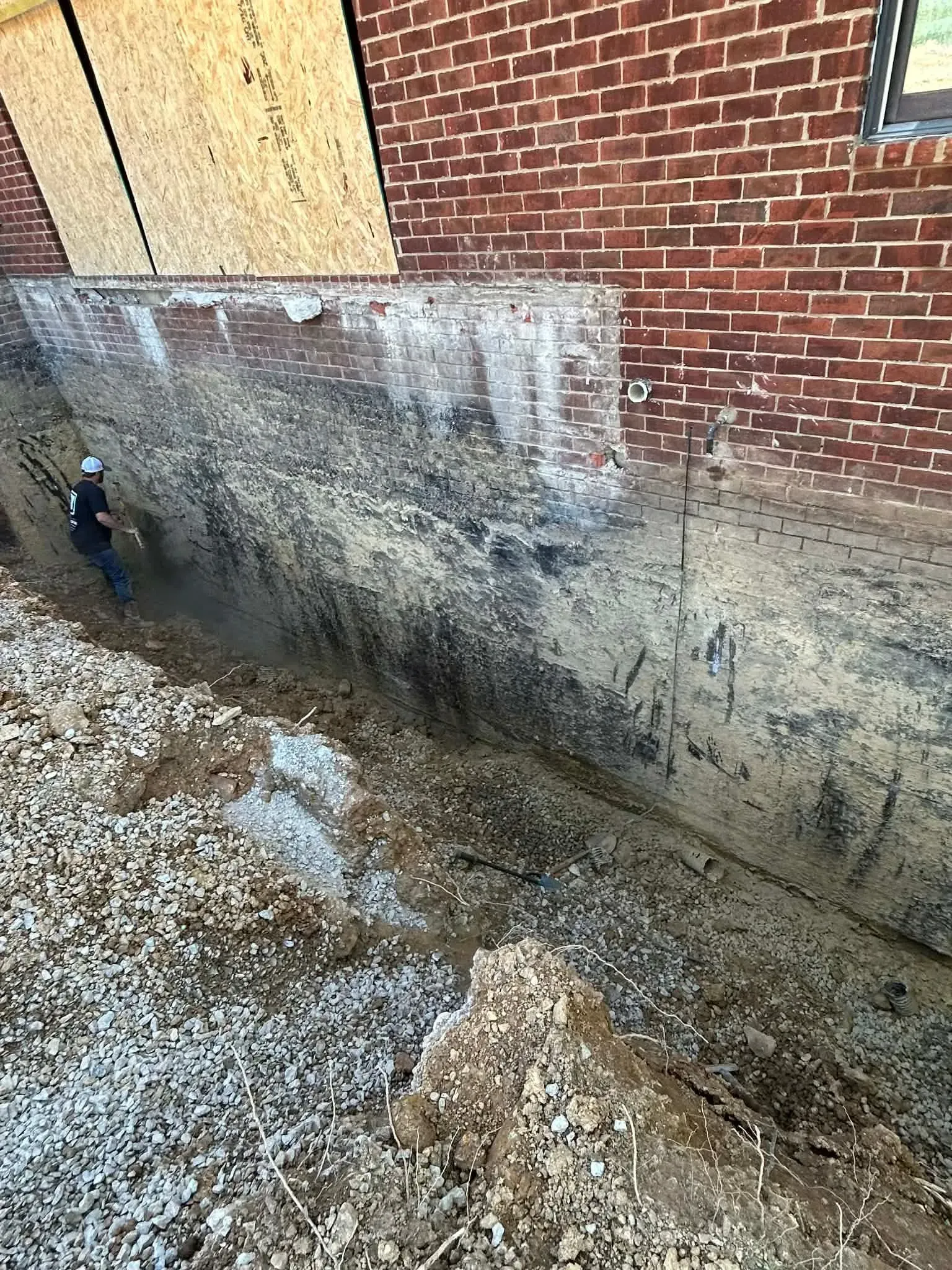
The exposed foundation wall is cleaned of soil, old coating, and debris. Active cracks are filled and sealed before the membrane is applied. Structural cracks that indicate wall movement are documented and flagged for stabilization work if needed.
Step 3: GMX Polymer-Modified Membrane Application

We apply GMX Ultra-Shield polymer-modified asphalt membrane directly to the clean wall surface. Unlike standard asphalt dampproofing applied at the time of construction, this membrane is formulated to resist hydrostatic pressure rather than just dampness. It bonds to the wall surface and remains flexible through Alabama's seasonal temperature swings, preventing cracking and debonding over time.
The membrane is applied to the full exposed wall surface from footer to grade, creating a continuous barrier with no gaps at joints or corners.
Step 4: Drainage Board Installation
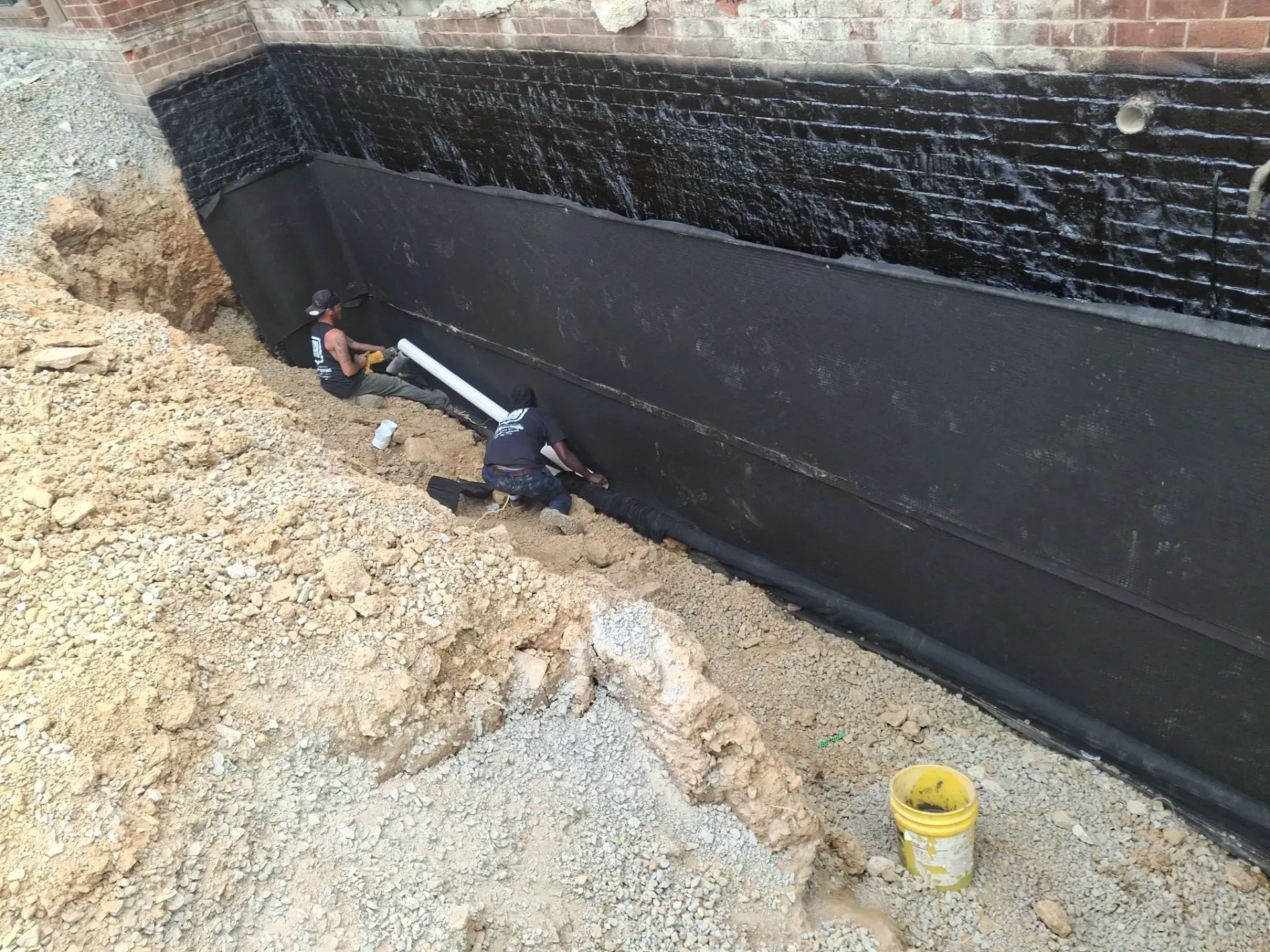
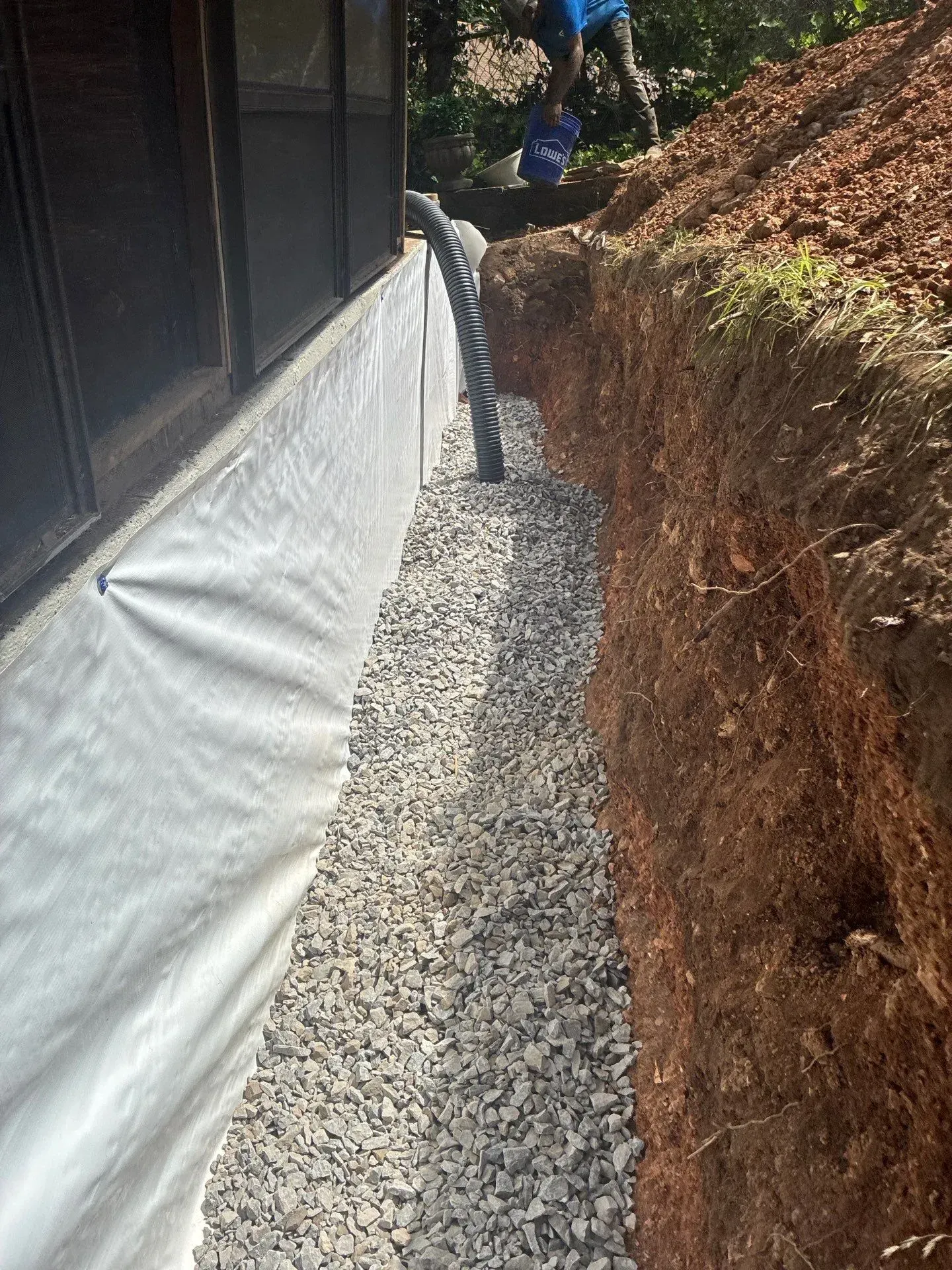
Over the membrane, we install a dimple drainage board. The board protects the membrane from backfill damage and creates a drainage channel between the soil and the wall, allowing water to flow downward to the footer drain rather than building hydrostatic pressure against the membrane.
The drainage board extends the service life of the membrane and reduces the pressure the system must resist.
Step 5: Footer Drain Installation

At the base of the excavation, alongside the footer, we install a perimeter drain pipe in a bed of clean gravel. This footer drain collects groundwater before it can rise against the wall and routes it away from the foundation.
The drain discharges to a daylight outlet or connects to an interior sump system depending on the site conditions and grade.
Step 6: Backfill and Restoration
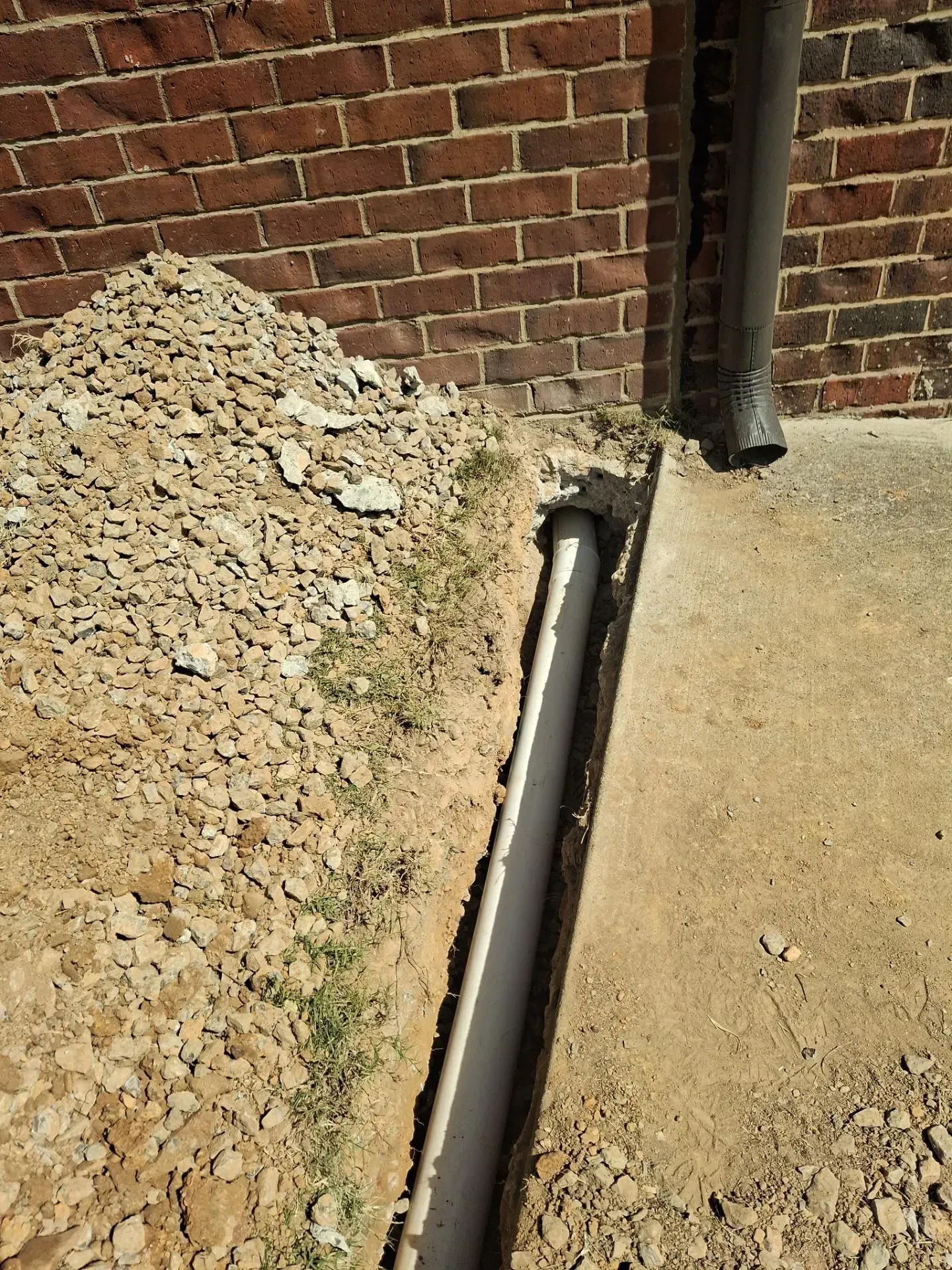
After the drainage system is inspected, we backfill the excavation with compactable gravel near the foundation and native soil at the surface.
The finished grade is sloped away from the foundation to promote surface water drainage. Landscaping that was removed during excavation is restored to the extent possible.

All exterior waterproofing work is guaranteed under H2O's fully transferable 25 year manufacturers warranty.
Interior vs. Exterior Waterproofing:
Which One Does Your Home Need?
Both systems permanently address basement water intrusion. The right choice depends on the source of your water problem and the condition of your foundation walls.
| Factor | Interior Waterproofing | Exterior Waterproofing |
|---|---|---|
| Typical cost | $4,500 - $8,000 | $8,000 - $15,000 |
| Timeline | 1-2 days | 2-5 days |
| Excavation required | No | Yes |
| Best for | Hydrostatic seepage, wall-floor joint, porous walls | Active structural cracks, high water volume |
| Yard disruption | None | Yes |
| Warranty | Lifetime | 25 Year Manufacturers Warranty |
Choose interior waterproofing when:
- Water enters through the wall-floor joint or through porous concrete and block walls
- Foundation walls are structurally sound (no bowing, no horizontal cracking)
- Yard access is limited or excavation is not practical
- Budget favors a less invasive solution
Choose exterior waterproofing when:
- Foundation walls have horizontal cracks or visible inward bowing
- Large or active structural cracks are present
- The original builder-grade membrane has degraded (homes 15 or more years old)
- Water volume is too high for interior drainage to manage alone
- New construction or full excavation is already planned
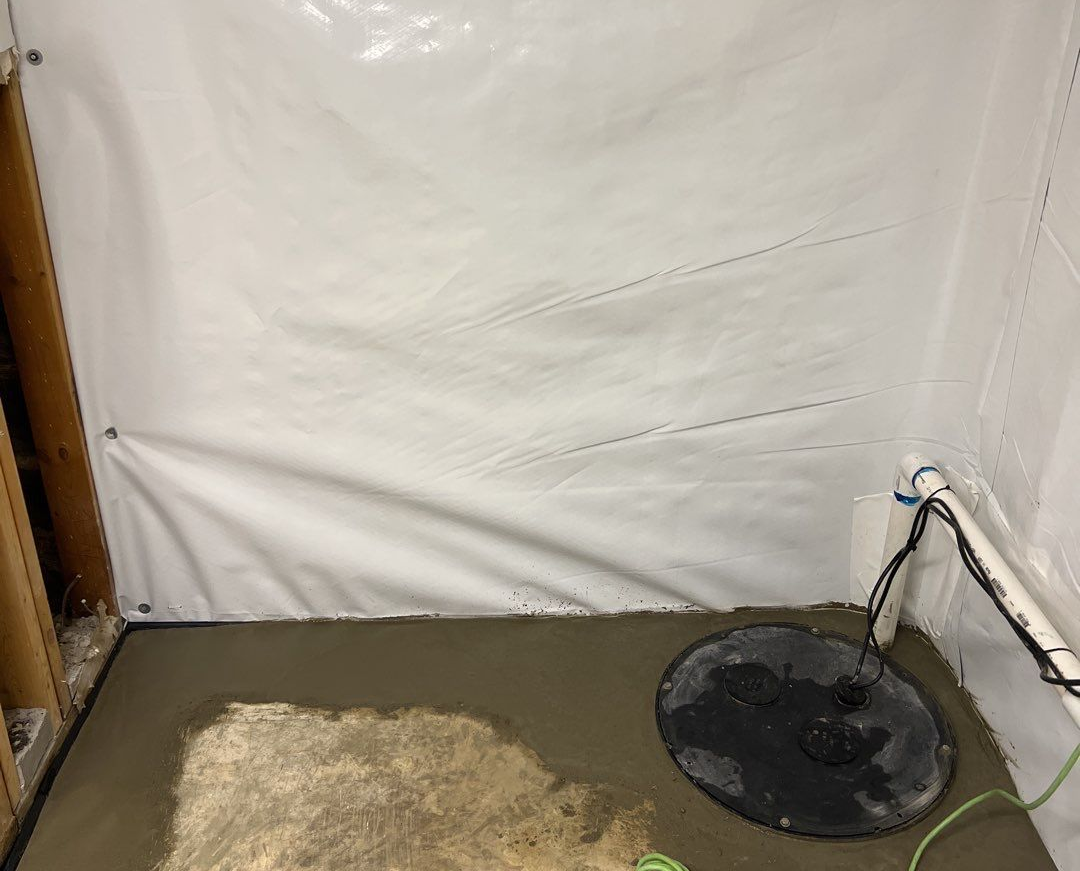
In some cases, H2O installs both systems together: exterior membrane to stop water at the wall, interior drainage to manage any seepage that passes through, and a sump pump to remove collected water. H2O's free inspection determines the correct scope for your home.
Not sure which system you need? H2O's free inspection identifies the water source, the condition of your foundation walls, and the correct system. No obligation. Call
(205) 956-2426.
Why Exterior Waterproofing Matters in Alabama's Climate
Alabama averages over 54 inches of rainfall per year. Jefferson County and Shelby County's red clay soil is highly expansive, absorbing water after every storm and pressing against foundation walls with sustained lateral force. That pressure is what drives horizontal cracking and wall movement in Alabama foundations.
Homes built in Alabama before 2000 frequently received builder-grade asphalt dampproofing at the time of construction rather than true waterproofing membrane. Asphalt dampproofing is designed to resist soil moisture but not sustained hydrostatic pressure.
After 10 to 15 years in Alabama's clay soil, the original coating becomes brittle, cracks, and loses its seal. Water follows the degraded surface and begins entering through wall joints, mortar beds, and construction cold joints.
Exterior waterproofing with a professional-grade polymer membrane reestablishes the barrier that was either never there or has since failed. Because the system is applied to the outside of the wall, water never contacts the foundation surface.
It is diverted at the point where it first contacts the drainage board, carried to the footer drain, and discharged away from the home.
What Exterior
Waterproofing Fixes
Exterior waterproofing permanently addresses the following conditions:
Active structural cracks with water intrusion.
Cracks that grow over time or that allow water to flow freely through the wall during rain require exterior treatment.
Interior drainage manages the water but does not seal the crack from the outside. Exterior membrane seals the crack and eliminates the pathway.
Failed builder-grade dampproofing.
Homes 15 or more years old that are experiencing new or increasing water intrusion often have degraded original coatings.
Re-waterproofing the exterior wall reestablishes the barrier with a professional-grade membrane designed for long-term hydrostatic resistance.
Horizontal cracking from soil pressure
Alabama's red clay creates lateral pressure that builds after heavy rain. Horizontal cracks are the structural result of that pressure.
Exterior waterproofing combined with carbon fiber wall stabilization addresses both the moisture and the structural threat.
High water volume from poor site drainage.
Homes on lower lots, near drainage corridors, or with downspout problems accumulate more water at the foundation than interior drainage can efficiently handle. Exterior drainage board and footer drain systems capture and route that water before it reaches the wall.
Deteriorated mortar joints in block walls.
Older concrete block foundations develop permeable mortar joints as the original mortar ages. Exterior membrane seals these joints across the full wall surface, something interior drainage cannot accomplish.
New construction protection.
The ideal time to install exterior waterproofing is during construction, before backfill. H2O installs exterior systems on new construction to provide full membrane protection from day one.
Enterior Waterproofing Cost in Alabama
Most residential exterior waterproofing projects in Alabama run between $8,000 and $15,000. Cost is determined by four factors: the linear footage of wall being excavated and treated, the depth of the foundation (which determines excavation volume), site access conditions (mature landscaping, fences, and tight lots increase cost), and whether supplemental work is needed before or during installation, such as crack injection, wall stabilization, or footer drain tie-in to an interior sump system.
Exterior waterproofing costs more than interior drainage because excavation is required. However, it is the only system that addresses structural wall conditions and eliminates water contact with the foundation surface entirely.
H2O provides free, itemized estimates with no obligation. You know the full cost before any work begins.
Financing is available. A properly installed exterior waterproofing membrane typically lasts 20 to 30 years or more. H2O's polymer-modified membrane is engineered for Alabama's soil conditions and carries a fully transferable 25 year manufacturers warranty.
Our 5-Step Installation Process
Step 1 - Free Inspection
An H2O technician visits your home, inspects the foundation walls from inside and outside, identifies the water source and entry points, and assesses the structural condition of the wall. The inspection takes about an hour and carries no cost or obligation.
Step 2: Diagnosis
We determine whether exterior waterproofing,
interior waterproofing,
wall stabilization, or a combination of systems is the correct solution. If structural repair is needed before waterproofing, we document that clearly in the estimate.
Step 3: Custom System Design.
We design the excavation scope, membrane specification, drainage board layout, and footer drain routing based on your foundation footprint, water load, and site conditions.
Step 4: Installation.
Our crew excavates to the footer, cleans and preps the wall, applies the membrane, installs drainage board and footer drain, and backfills the excavation. Most Alabama residential jobs complete in two to five days depending on the scope of excavation.
Step 5: 25 Year Manufacturers Warranty
Every H2O exterior waterproofing installation carries a fully transferable 25 year manufacturers warranty. If water returns through the treated area, we return at no charge. The warranty transfers to new owners when the home is sold.
Get in touch for a professional estimate and expert guidance. Call Call (205) 956-2426 for a free inspection or schedule online.
Frequently Asked Questions
Answers provided by Eric Hamilton, owner of H2O Waterproofing, with 23+ years of waterproofing experience in Jefferson and Shelby County, Alabama.
What are the signs I need exterior rather than interior waterproofing?
The clearest indicators are horizontal cracks in the foundation wall, visible inward bowing or displacement of the wall, active structural cracks that change in width over time, and water entering at multiple points across the same wall face rather than at a single joint.
These conditions indicate soil pressure or structural stress that interior drainage cannot address. Interior drainage manages water that gets through the wall. Exterior waterproofing stops water from reaching the wall in the first place and is the appropriate system when the wall itself is compromised.
What is exterior basement waterproofing?
Exterior basement waterproofing is a barrier system applied to the outside of your foundation walls. The process involves excavating to the footer, applying a waterproofing membrane directly to the exposed wall surface, installing a drainage board over the membrane, and placing a perimeter footer drain to redirect groundwater away from the foundation. The system stops water before it contacts your foundation.
H2O uses GMX Ultra-Shield polymer-modified asphalt membrane, which delivers significantly greater hydrostatic head resistance than the builder-grade dampproofing applied to most Alabama homes at the time of construction.
How long does exterior waterproofing take?
Most Alabama residential exterior waterproofing jobs complete in two to five days. Timeline depends on the linear footage of wall being excavated, the depth of the foundation, and site conditions. Excavation in tight spaces near fences or landscaping takes longer than open access. H2O provides a specific timeline with your estimate before work begins.
How much does exterior waterproofing cost in Alabama?
Most Alabama residential exterior waterproofing projects run between $8,000 and $15,000.
The primary cost variables are the linear footage of excavation, foundation depth, and site access conditions. Homes with limited access (fence lines, mature trees, adjacent structures) run toward the higher end.
Projects that include supplemental wall stabilization or interior sump tie-in are scoped separately.
H2O provides free, itemized estimates with no obligation. Financing is available. Call (205) 956-2426.
Will exterior waterproofing work on concrete block walls?
Yes. Exterior waterproofing is particularly effective on concrete block foundations because the membrane seals the mortar joints and the block face across the full wall surface, something interior drainage cannot accomplish.
H2O's technicians inspect block wall foundations for mortar deterioration and failing joints during the free inspection and incorporate any necessary repairs into the scope before the membrane is applied.
Does exterior waterproofing fix bowing walls?
Exterior waterproofing addresses the water and pressure component of wall bowing but does not structurally stabilize the wall on its own.
Bowing or inward-displaced foundation walls require wall stabilization, typically carbon fiber straps or wall anchors, before or concurrent with exterior waterproofing. H2O scopes both repairs as part of the same project when needed.
Our Services

Protect your home
Get in touch today to discuss your project. We will be happy to answer your questions and provide a no-obligation FREE estimate.
4.9 / 5 ★★★★★
CLIENT SATISFACTION
What Our Customers Say






Proudly Serving the Birmingham Metro Area
H2O Waterproofing serves these Birmingham-area communities:
Our TESTIMONIALS
What Alabama Homeowners Say About
H2O Waterproofing
HERE'S WHAT MAKES US DIFFERENT!
We offer a specialized “Peace of Mind” Maintenance Program designed for Preventative care and maintenance on all products installed by H2O Waterproofing, LLC.
H2O technicians are not salesmen. They are highly trained professionals, with a minimum of 10 years of waterproofing experience.
Since 2003, H2O Waterproofing has been Alabama's most trusted waterproofing and foundation repair contractor.
We pride ourselves with providing our customers with the best customer experience, one waterproofing job at a time.
Check our blog: