
A wet basement in Alabama is not a plumbing problem. The water comes from outside the house, pushed in by the soil, rainfall and the pressure they generate together. Alabama averages 54 inches of rainfall per year, more than Seattle and more than most of the country. Jefferson, Shelby, Cullman and Talladega counties sit on expansive red clay soil that holds that water against your foundation with sustained pressure for days after each storm.
Understanding why your basement gets wet is the first step to fixing it permanently. Here are the most common causes and how to identify which one applies to your home. See H2O's basement waterproofing services.
Cause 1: Hydrostatic Pressure from Alabama's Clay Soil
Hydrostatic pressure is the force water exerts against a surface when it has nowhere to go. In most of the country, rainwater drains through the soil and dissipates. In Alabama, the red clay soil around most residential foundations absorbs water and retains it, creating a saturated zone around the foundation perimeter that persists long after the rain stops.
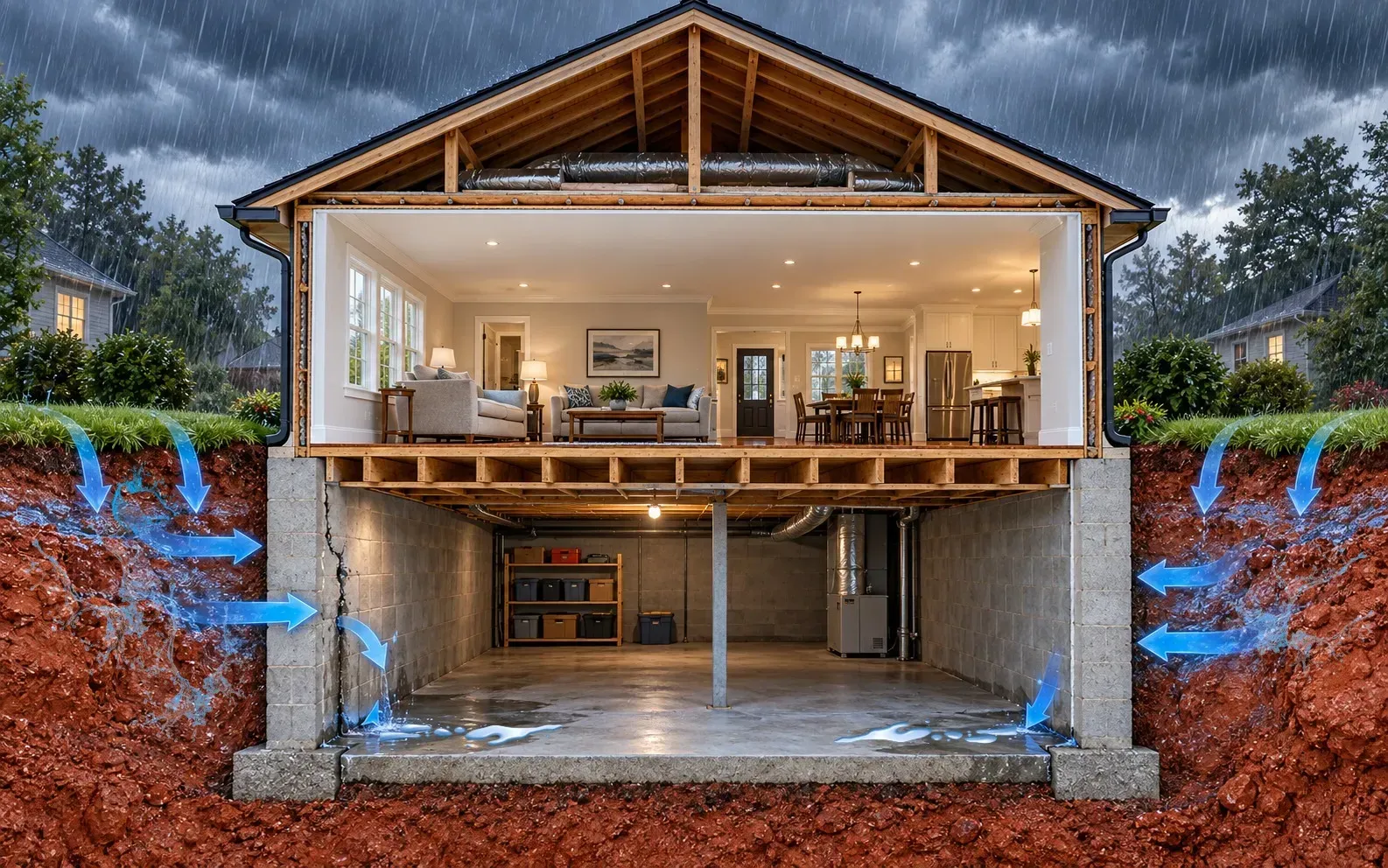
That saturated clay generates pressure against your foundation walls and floor. The pressure finds the weakest point in your foundation, whether a crack, a porous concrete block or the joint where the wall meets the floor, and forces water through it into the basement.
Hydrostatic pressure is the root cause behind most of the specific entry points covered below. Addressing the entry point without addressing the pressure that drives water through it produces a temporary fix. The Alabama Cooperative Extension Service notes that Alabama's clay-heavy soils have some of the highest water-holding capacity of any soil type in the southeastern United States, which is why the hydrostatic pressure problem in this region outlasts drainage solutions that work in sandier states.
Cause 2: Wall-Floor Joint Failure
The joint where the foundation wall meets the basement floor slab is the single most common water entry point in Alabama basements. This joint is not welded or fused — the floor slab is poured separately from the wall and sits adjacent to it. Over time, hydrostatic pressure forces water through this gap.
You will see water appearing along the base of the wall, sometimes as a thin seam of moisture and sometimes as a steady trickle during or after heavy rain. The wall itself may look dry above the joint. The water is not coming through the wall above. It is coming from below and beside it, at the joint.
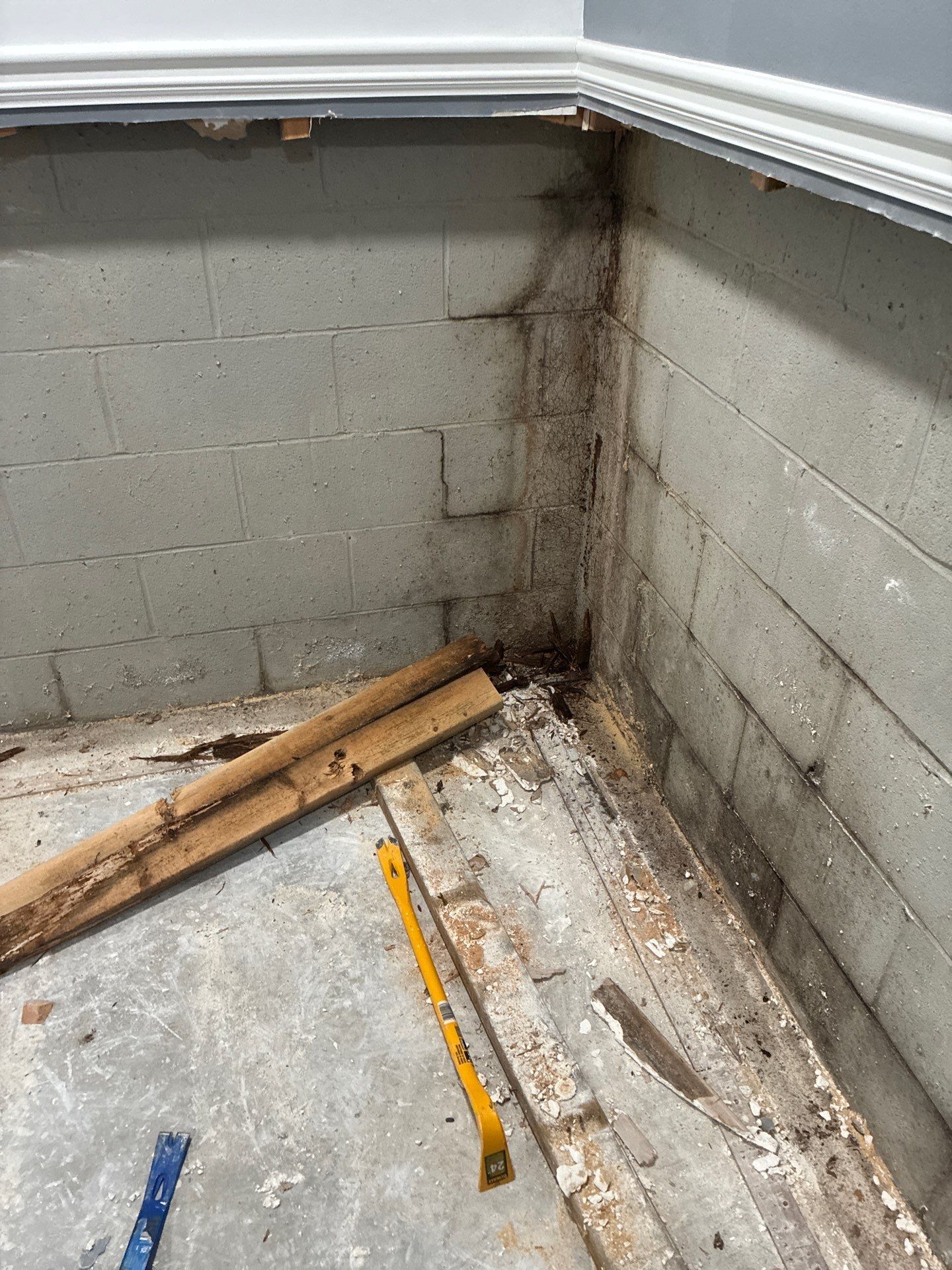
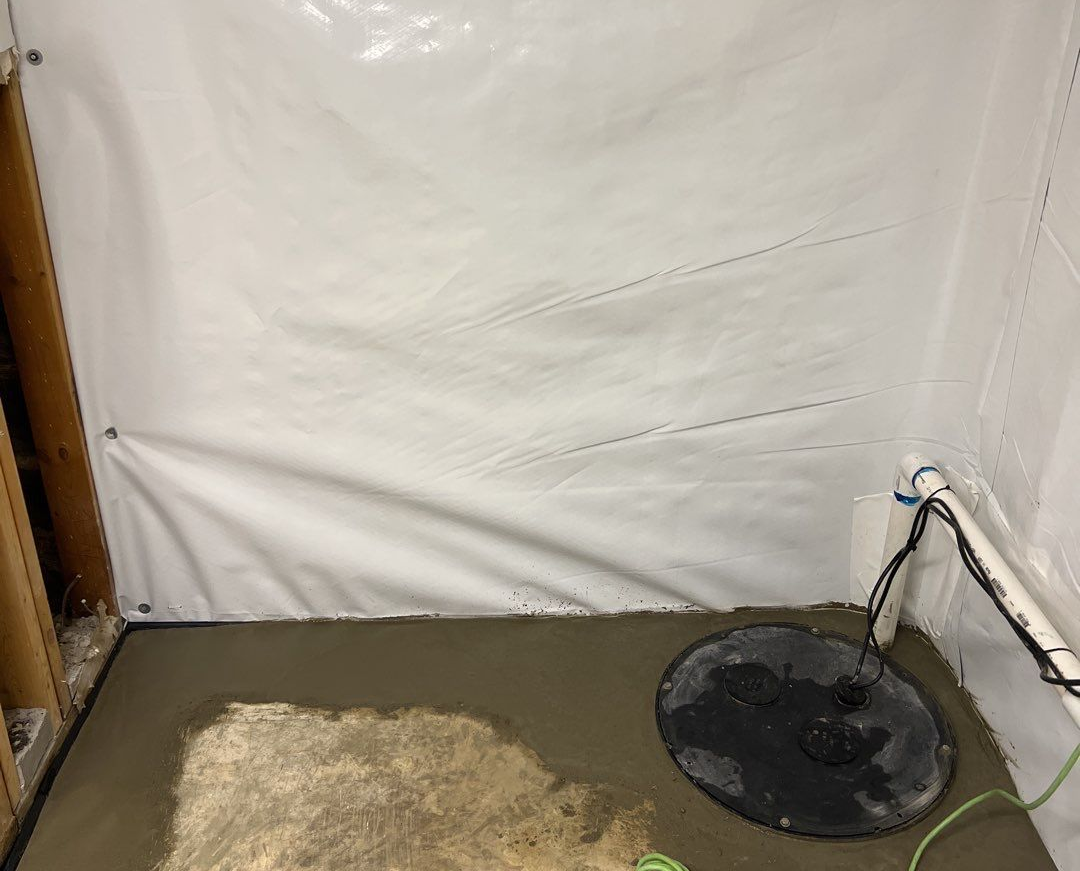
Interior drainage systems are installed specifically at this junction. A channel cut along the base of the wall captures water at the wall-floor joint and routes it to a sump pump before it spreads across the basement floor. This is why interior waterproofing is the most common solution for Alabama basements — it addresses the most frequent entry point directly.
Cause 3: Foundation Cracks
Cracks in foundation walls and floors are common in Alabama homes. The type of crack tells you the cause, and the cause tells you the correct repair.
Vertical cracks in poured concrete walls typically result from differential settling. The foundation has moved down at different rates at different points, creating tension that cracks the wall vertically. Water follows gravity through a vertical crack from above.
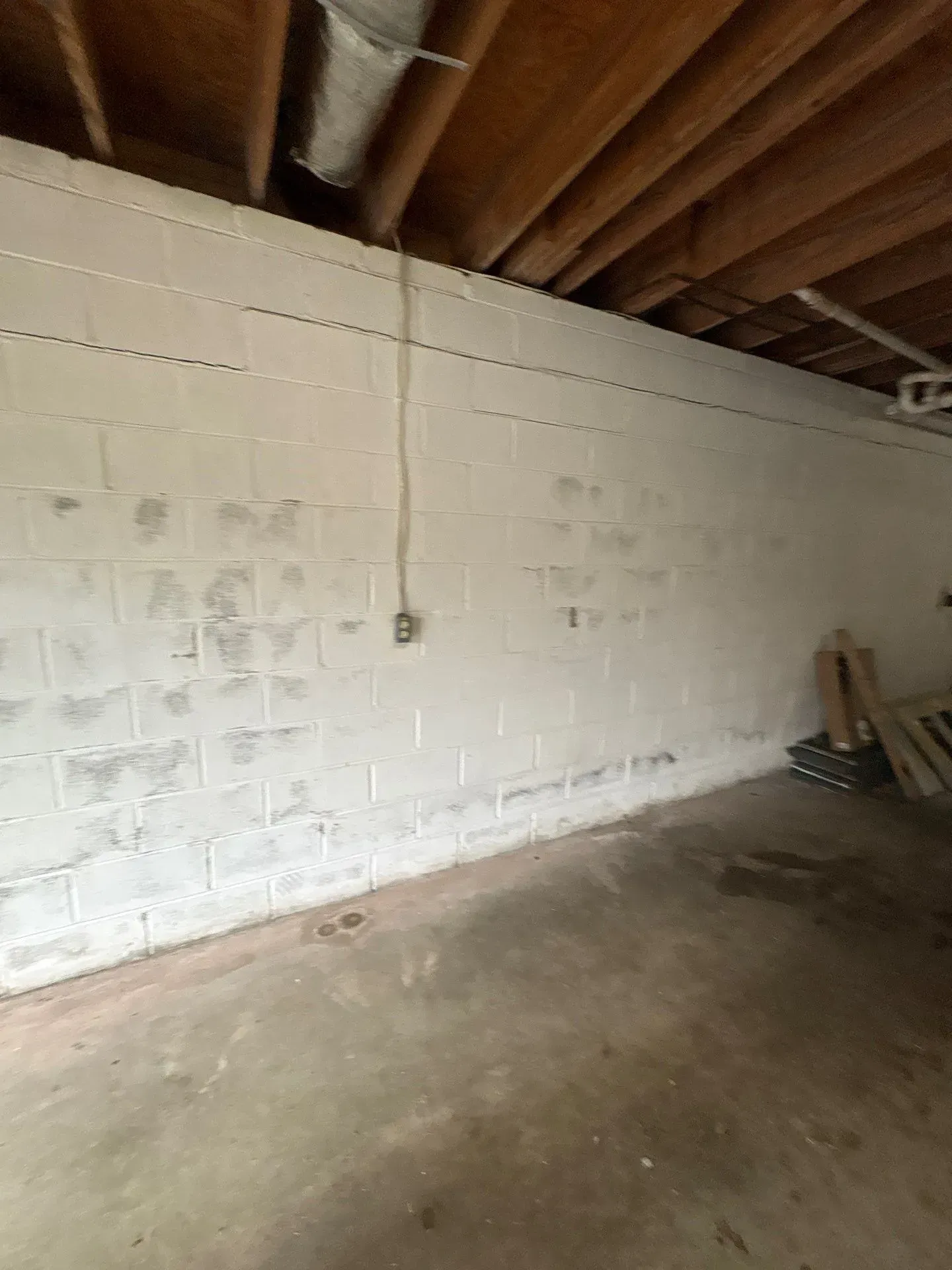
Horizontal cracks indicate lateral soil pressure. The soil outside the wall is pushing inward and the wall is flexing under that pressure. Horizontal cracks are the most serious crack type, they indicate the wall is bowing. Left unaddressed, bowing progresses at approximately 0.5 to 1 inch per year in Alabama's clay soil. For a full breakdown, see Bowing Basement Walls: What Causes Them and When to Act.
Diagonal cracks at corners or near window openings indicate settlement at a specific point, usually from soil erosion or voids beneath the footing.
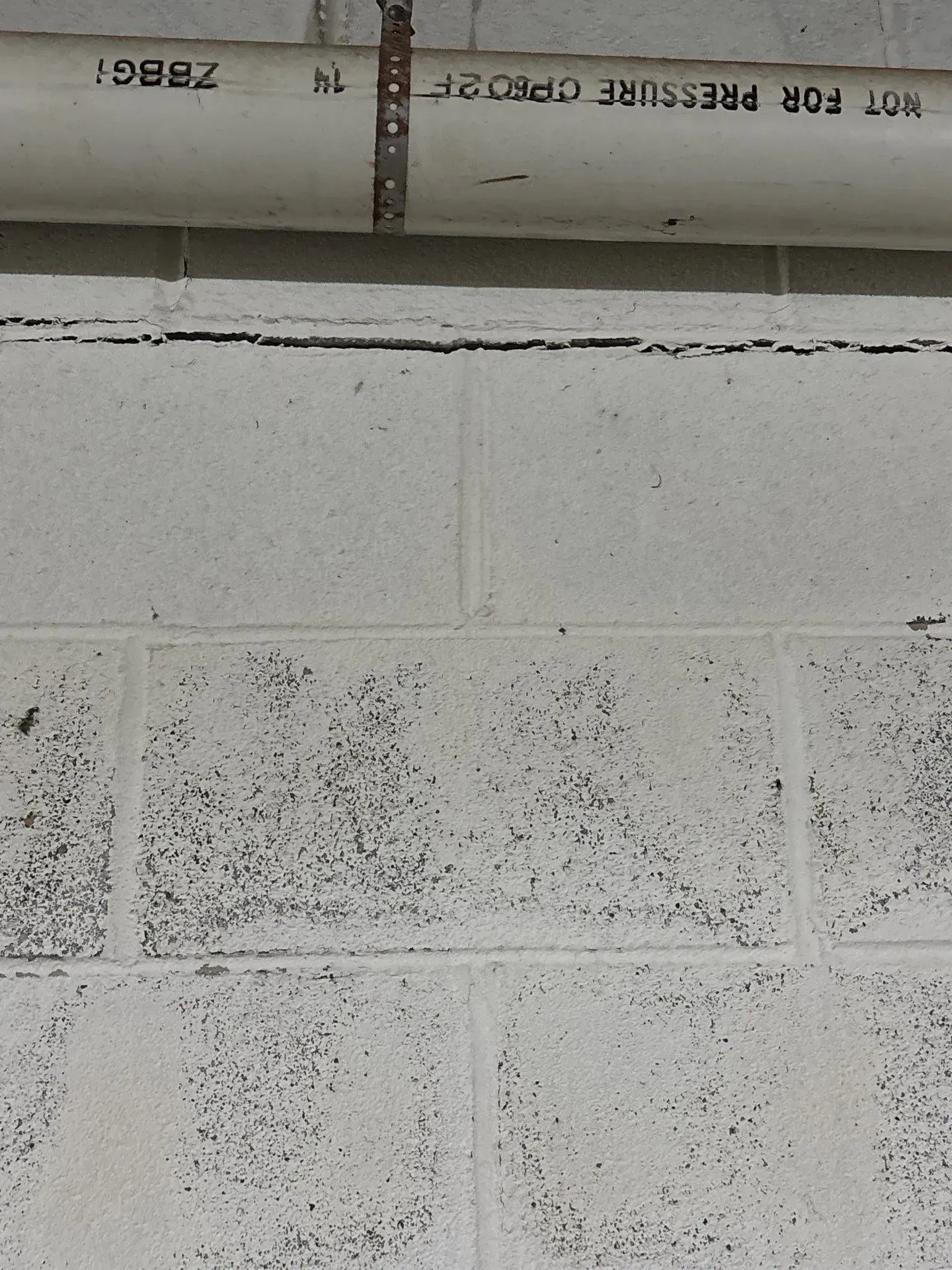
All three crack types allow water to enter the basement. The correct repair addresses both the crack and the water source driving it. For a complete guide to crack identification, see Foundation Cracks vs. Normal Settling: What Alabama's Clay Soil Means for Your Home.
Cause 4: Poor Exterior Grading
The ground around your foundation should slope away from the house at a rate of at least 6 inches over the first 10 feet. When that grade is flat or slopes toward the house, rainfall pools at the foundation rather than draining away from it.
In Alabama, grading problems compound quickly because of the clay soil. Water pooling at the foundation soaks into the clay layer around the perimeter. That clay swells, increases pressure against the wall and holds moisture in place for extended periods after the rain stops. A grading correction is one of the most effective and least expensive drainage improvements an Alabama homeowner can make.
If your basement gets wet primarily during or within a few hours of heavy rain, poor grading is a likely contributor. Water from grading problems arrives quickly. Water from hydrostatic pressure in saturated clay arrives 24 to 72 hours after rain.
Cause 5: Gutter and Downspout Discharge
Gutters collect roof runoff and route it through downspouts to the ground. Where that water lands matters. When downspouts discharge within 4 to 6 feet of the foundation, they deposit large volumes of water directly into the saturated clay zone around the perimeter.
A single downspout during a moderate Alabama storm event discharges hundreds of gallons of water. If that discharge lands 18 inches from your foundation wall and soaks into clay soil, it adds directly to the hydrostatic pressure load driving water into your basement.
Downspout extensions or underground drain tile systems route that discharge further from the foundation. For a full explanation of how drain tile systems manage surface and subsurface water loads, see What Is Drain Tile? Interior vs. Exterior Installation for Alabama Homes.
Cause 6: Window Well Failure
Basement windows installed at or near grade are surrounded by window wells, semicircular structures filled with drainage gravel. When the gravel clogs with clay sediment or the drain at the bottom of the well fails, water pools in the well and seeps through the window frame or the surrounding wall.
Window well leaks are typically localized, water appears only near a specific window. The fix involves cleaning or replacing the window well drain, replacing the clogged gravel fill and in some cases installing a window well cover to reduce the volume of water entering the well.
How to Identify Your Water Source
Pinpointing the entry point tells you which fix addresses your situation.
Where does the water appear? Water at the base of the wall indicates wall-floor joint entry. Water appearing midway up the wall or through the wall face indicates seepage through porous concrete or a crack. Water pooling directly below a window indicates window well failure.
When does the water appear? Water entering during or within a few hours of heavy rain indicates surface water from grading, gutters or window wells. Water appearing 48 to 72 hours after rain indicates groundwater and hydrostatic pressure from saturated clay soil.
Is the water appearing in one location or along the full perimeter? A single entry point suggests a crack or a window well. Water appearing along the entire perimeter of the basement floor suggests hydrostatic pressure at the wall-floor joint throughout the foundation. The EPA's moisture control guidance identifies distinguishing entry point timing and location as the critical first diagnostic step before any remediation plan.
Matching the Cause to the Correct Fix
Interior waterproofing is the correct system when water enters through the wall-floor joint or through porous concrete and block walls driven by hydrostatic pressure. A perimeter drainage channel routes water to a sump pump before it reaches the floor.
Exterior waterproofing is the correct system when foundation walls have structural cracks, when the water volume exceeds what interior drainage alone manages or when a full excavation is already being performed for another reason.
Foundation repair addresses bowing walls, significant structural cracking and foundation movement before waterproofing is installed. Structural issues are resolved first. Waterproofing follows.
Grading corrections and downspout extensions reduce the water load reaching the foundation. H2O assesses grading and gutter discharge during every free inspection and documents what supplemental improvements benefit the waterproofing system.
Frequently Asked Questions
Why does my basement only get wet during heavy rain?
Water entering during or immediately after rain is typically surface water, grading sloping toward the foundation, downspouts discharging close to the wall or a failed window well. The water travels to the foundation quickly because it is coming from the surface rather than building up underground. If water also appears 48 to 72 hours after rain, hydrostatic pressure from saturated clay is contributing as well.
Is a wet basement a structural problem or a water problem?
Most wet basements are water problems driven by hydrostatic pressure, not structural failures. The exception is when foundation walls are bowing inward from lateral soil pressure. That condition is both structural and a water problem, and the structural component is addressed before waterproofing. Horizontal cracks in foundation walls are the indicator of a structural condition. Vertical cracks from settling and seepage at the wall-floor joint are water problems without a structural component.
Will a dehumidifier fix my wet basement?
A dehumidifier reduces humidity in the air but does not address water entering through the foundation. If water is physically entering through the wall, floor or joints, a dehumidifier runs continuously trying to keep up with active intrusion. The correct sequence is waterproofing first to stop the water entry, then a dehumidifier to manage residual humidity in the enclosed space.
How much does it cost to fix a wet basement in Alabama?
Cost depends on the entry point and the required system. Interior drainage systems for most Alabama residential basements run $4,500 to $8,000. Exterior waterproofing runs $8,000 to $15,000. Grading corrections and downspout extensions are often $500 to $2,000 depending on scope. For a full cost breakdown by system type, see How Much Does Basement Waterproofing Cost in Alabama?
What happens if I ignore a wet basement?
Water intrusion left unaddressed causes mold growth, wood rot in floor joists and sill plates, damage to flooring and finished basement space and in some cases accelerates foundation deterioration. In Alabama's climate, basement humidity above 60% is common when water is entering through the foundation, and sustained humidity at that level creates conditions for mold growth within weeks. The cost of addressing water intrusion increases with the duration — a wall-floor joint repair in year one is a waterproofing channel installation; that same wall after five years of wet conditions may also require mold remediation and joist repair.
Does waterproofing a basement add value to a home in Alabama?
A waterproofed basement with a transferable warranty is a documented improvement Alabama buyers and their inspectors look for. Homes with waterproofing documentation typically move faster and with fewer negotiated deductions than homes with active or recent water intrusion. For realtors working with homes that have water history, see H2O's program for real estate transactions.
H2O Waterproofing Diagnoses and Fixes Wet Basements Throughout Alabama
H2O Waterproofing has diagnosed and resolved wet basements in Alabama homes since 2003. Every inspection identifies the specific water source. Every estimate is itemized. Every installation carries a fully transferable lifetime warranty. BBB A+ rated.
Call (205) 956-2426 or schedule your free inspection online . Most inspections take about an hour and produce a written estimate the same day.
Search Post
Recent Posts


Share post