
A bowing basement wall is not a cosmetic issue. It is a structural failure in progress. The wall is being pushed inward by the soil outside it, and that soil will not stop pushing.
Alabama homes are especially vulnerable. Jefferson, Shelby, Cullman and Talladega counties sit on expansive red clay soil that absorbs water and swells volumetrically. After each rain event soaks that clay, the soil expands and presses against foundation walls with lateral force measured in thousands of pounds per square foot. When the soil dries, it contracts and pulls away, then repeats the cycle with the next storm. Over years and decades, that repeated lateral load is what bows foundation walls inward.
H2O Waterproofing has assessed and repaired bowing walls in Alabama basements since 2003. This is what causes them, how to measure severity and what repair options stop the damage. See H2O's foundation repair services.
What Causes Bowing Basement Walls
The primary cause is lateral soil pressure. Foundation walls are designed to resist the vertical load of the house above them. They are not engineered to resist sustained lateral pressure from soil pushing horizontally against the wall face.
In most U.S. climates, the soil around a foundation stays relatively stable. In Alabama, the clay mineral content of the soil means it expands when wet and contracts when dry. Each wet season, the clay pushes against the foundation wall with renewed lateral force. Each dry season, the soil pulls away and cracks, creating new pathways for water to pool against the wall during the next rain cycle.
Over time, repeated lateral loading cracks the wall, typically along horizontal mortar joints in concrete block walls or in horizontal bands across poured concrete walls. Those cracks allow the wall to flex inward under pressure. Once flexing begins, the wall does not return to its original position when the soil dries. Each wet-dry cycle moves the wall slightly further in. Alabama averages over 54 inches of rainfall per year, which means this cycle runs continuously from spring through fall.
Other contributing factors include poor exterior drainage that allows water to pond against the foundation, gutters discharging too close to the wall and tree roots displacing soil against the foundation perimeter.
How to Identify a Bowing Wall
Not all bowing walls are obvious to the eye. Here is how to assess yours before calling a contractor.
String line test. Hold a string taut across the top of the wall from corner to corner. Measure the gap between the string and the wall face at the midpoint. A gap of more than 1 inch indicates measurable displacement. A gap of more than 2 inches requires immediate action.
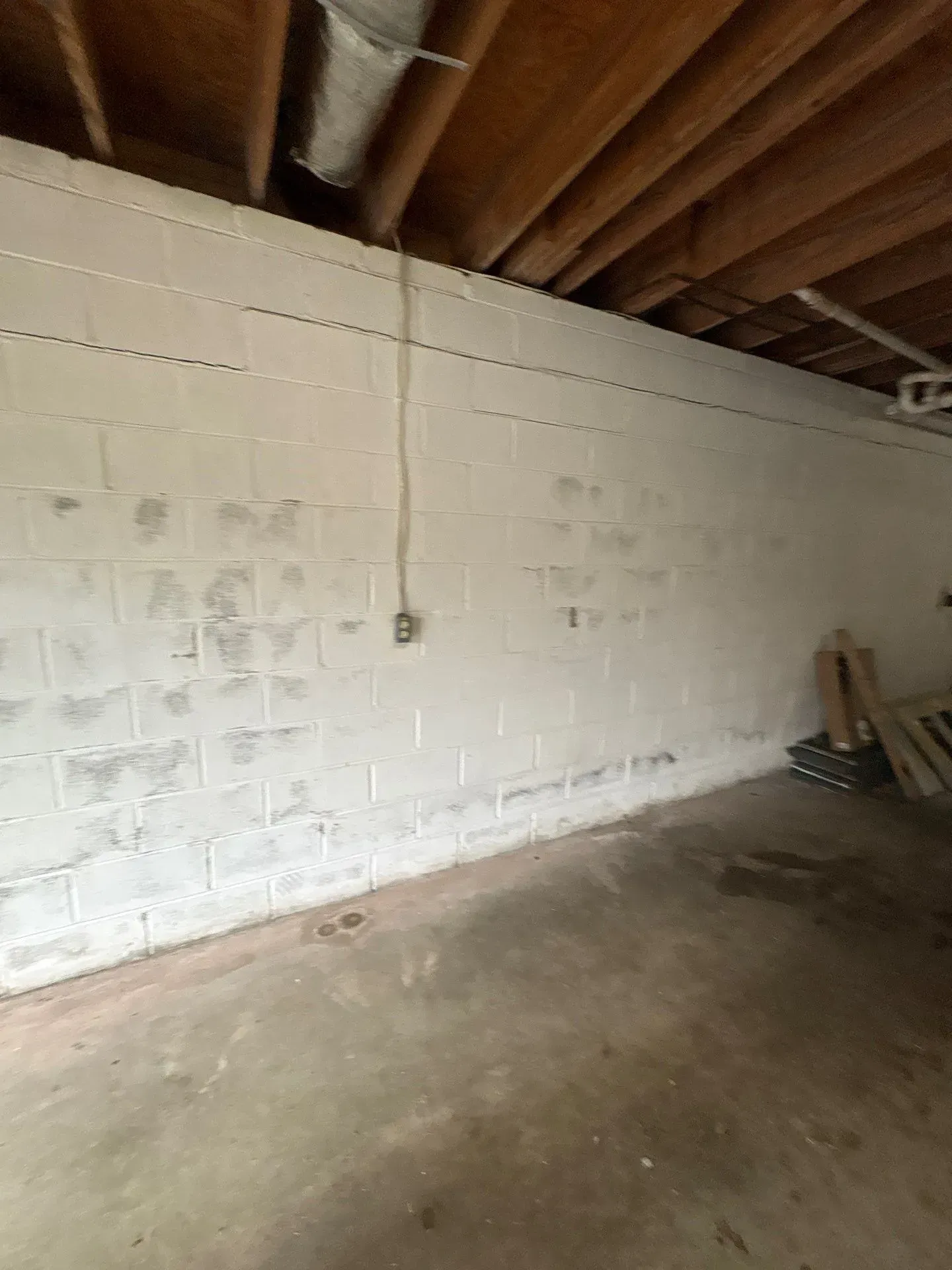
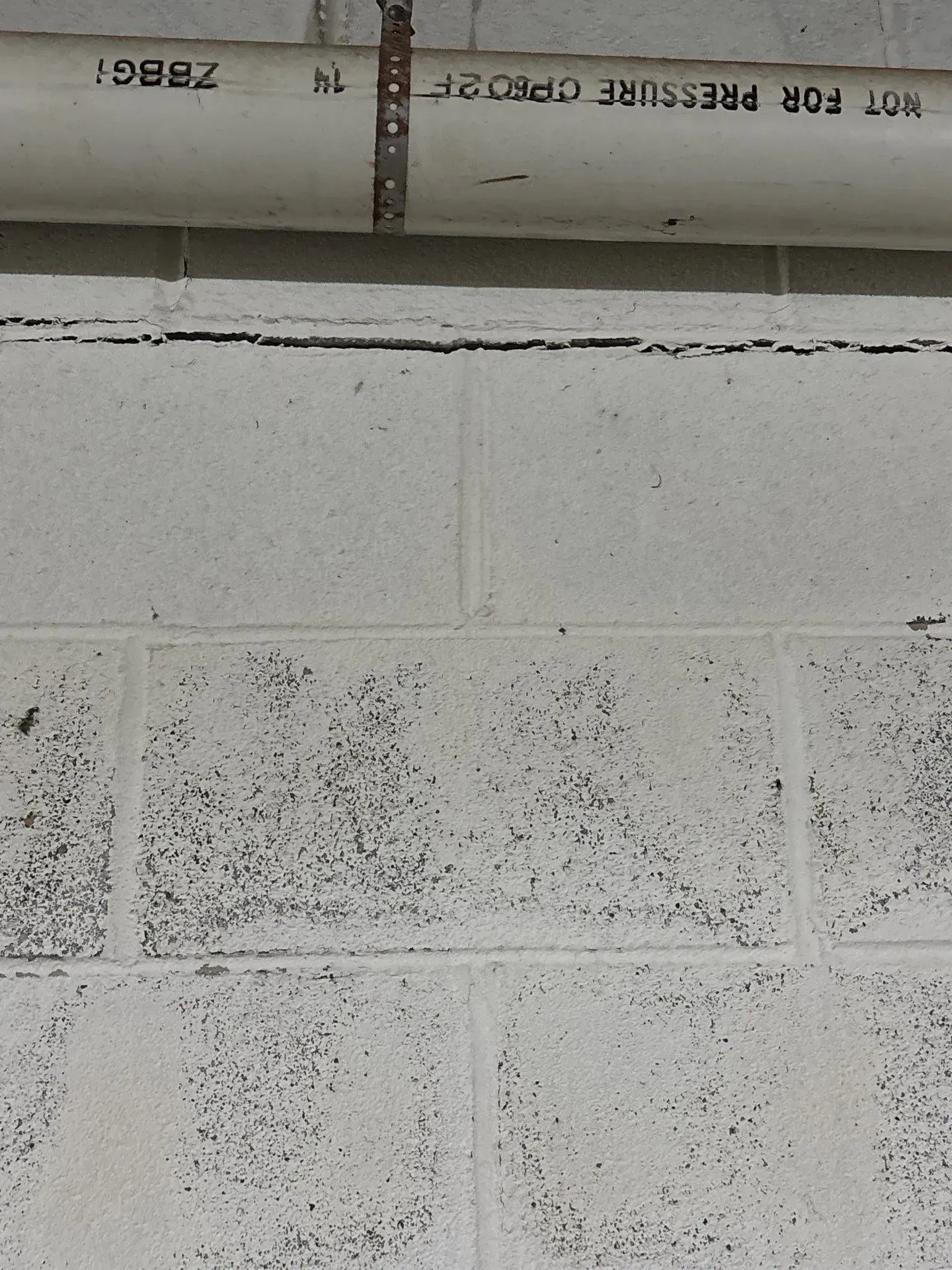
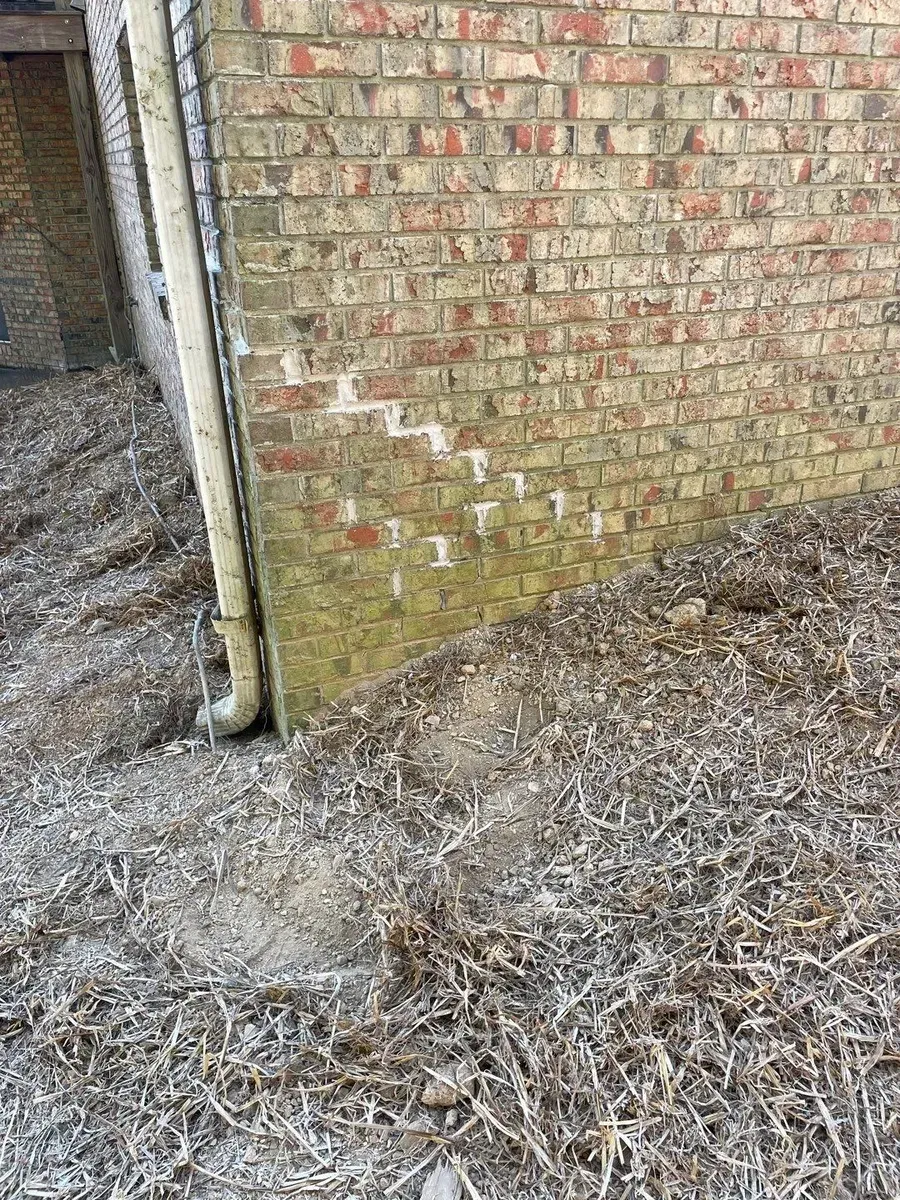
Horizontal cracks. Horizontal cracks in a concrete block or poured concrete wall are the primary visual indicator of lateral soil pressure. Unlike vertical cracks from settling or diagonal cracks from differential foundation movement, horizontal cracks mean the wall is being pushed sideways. Any horizontal crack in a foundation wall deserves professional evaluation. For a full guide to crack types, see Foundation Cracks vs. Normal Settling: What Alabama's Clay Soil Means for Your Home.
Wall lean. Stand at the base of the wall and look up. A wall leaning inward at the top or bulging outward at the midpoint has displaced. Even a slight visible lean is a serious structural indicator.
Separation at the top. Where the foundation wall meets the floor joists above it, look for gaps or cracks at the sill plate connection. As the wall bows in, the top of the wall pulls away from the structure above.
Stages of Bowing: How Serious Is Yours
Less than 1 inch of displacement. Monitor. Document the crack locations and measure displacement with a string line. Check quarterly. If the wall has been stable through two or more wet seasons, repair can be planned but is not yet an emergency. Left unaddressed, walls at this stage progress.
1 to 2 inches of displacement. Schedule repair. At this stage, carbon fiber straps installed horizontally across the wall will arrest further movement and provide structural reinforcement. The window to use the least invasive repair method is at this stage. Waiting until displacement exceeds 2 inches significantly increases both cost and the invasiveness of repair required.
More than 2 inches of displacement. Act immediately. At more than 2 inches of inward movement, the wall has lost significant structural capacity and is at risk of sudden failure under the next heavy rainfall. Repairs at this stage require wall anchors, excavation or in severe cases, wall reconstruction.
Why Bowing Walls Get Worse Over Time
Each wet-dry cycle in Alabama advances the wall's displacement. When the clay swells and pushes the wall in, the wall cracks and flexes slightly further than before. When the clay dries, the wall does not return to its previous position because the cracks have opened. The new cracked position becomes the starting point for the next wet season's pressure load.
This is why bowing walls do not stabilize on their own. A wall at 1 inch of displacement today will typically be at 1.5 inches the following year and 2 inches the year after in Alabama's clay soil. Each additional inch of displacement raises repair costs and raises the probability of sudden structural failure. Alabama's climate provides no off-season for this process, the state receives significant rainfall year-round.
Repair Options for Bowing Walls in Alabama
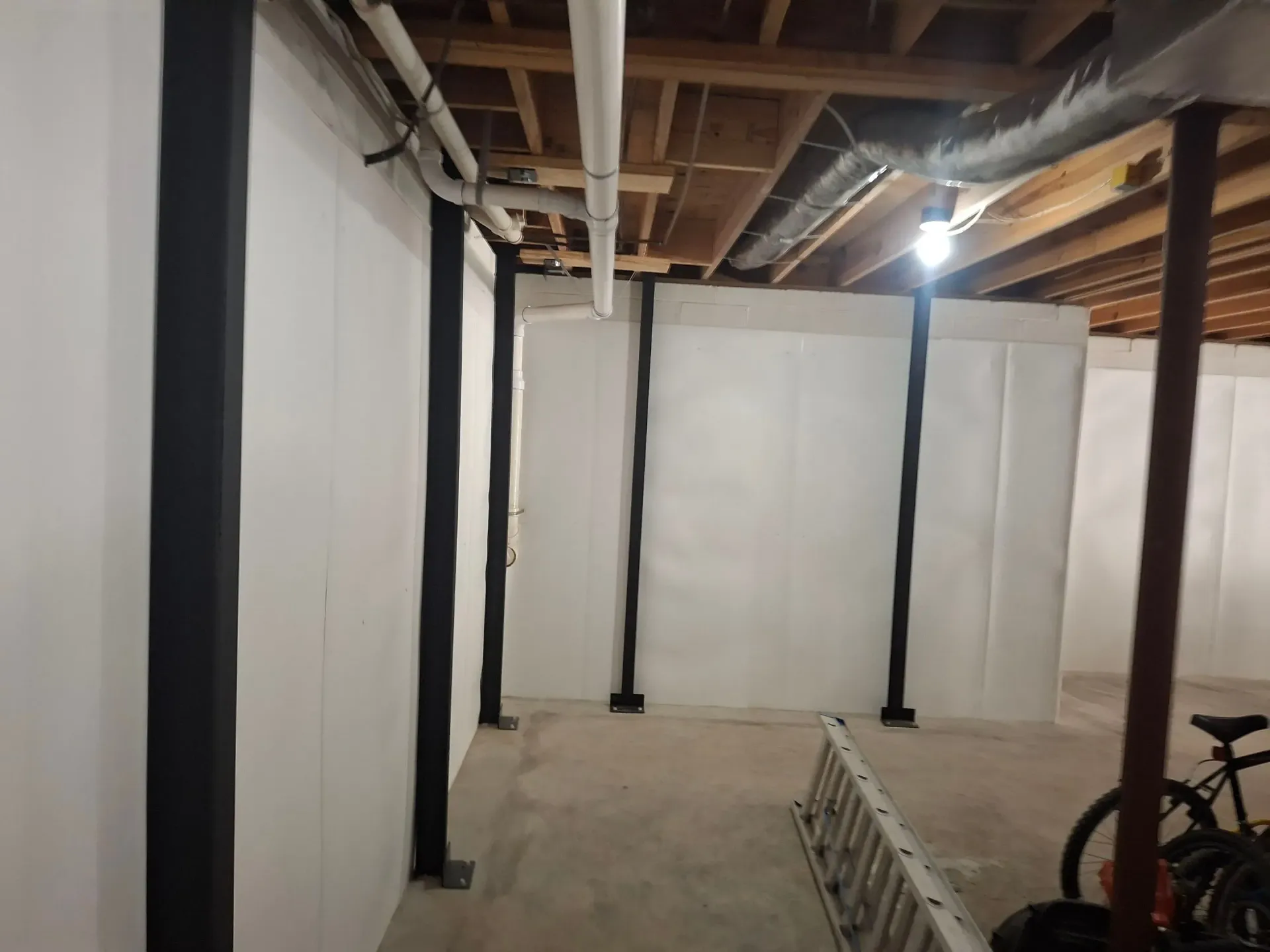
Carbon fiber straps. Installed horizontally across the bowing wall, carbon fiber straps provide high-tensile reinforcement that resists further inward movement. The strap is bonded to the wall face with structural epoxy and anchored at the floor and ceiling framing. Carbon fiber straps arrest movement but do not push the wall back to its original position. Cost runs $1,500 to $3,500 per wall section. Carbon fiber is most effective when displacement is under 2 inches and the wall has not experienced significant structural cracking.
Wall anchors. Steel anchors are driven horizontally through the foundation wall into the undisturbed soil beyond the pressure zone. A steel plate is seated against the wall face on the interior side and connected to a buried anchor plate outside. Wall anchors both arrest movement and, over time, can be periodically tightened to gradually restore the wall toward its original position. Cost runs $5,000 to $12,000 for a complete wall anchor system depending on anchor count and perimeter length involved.
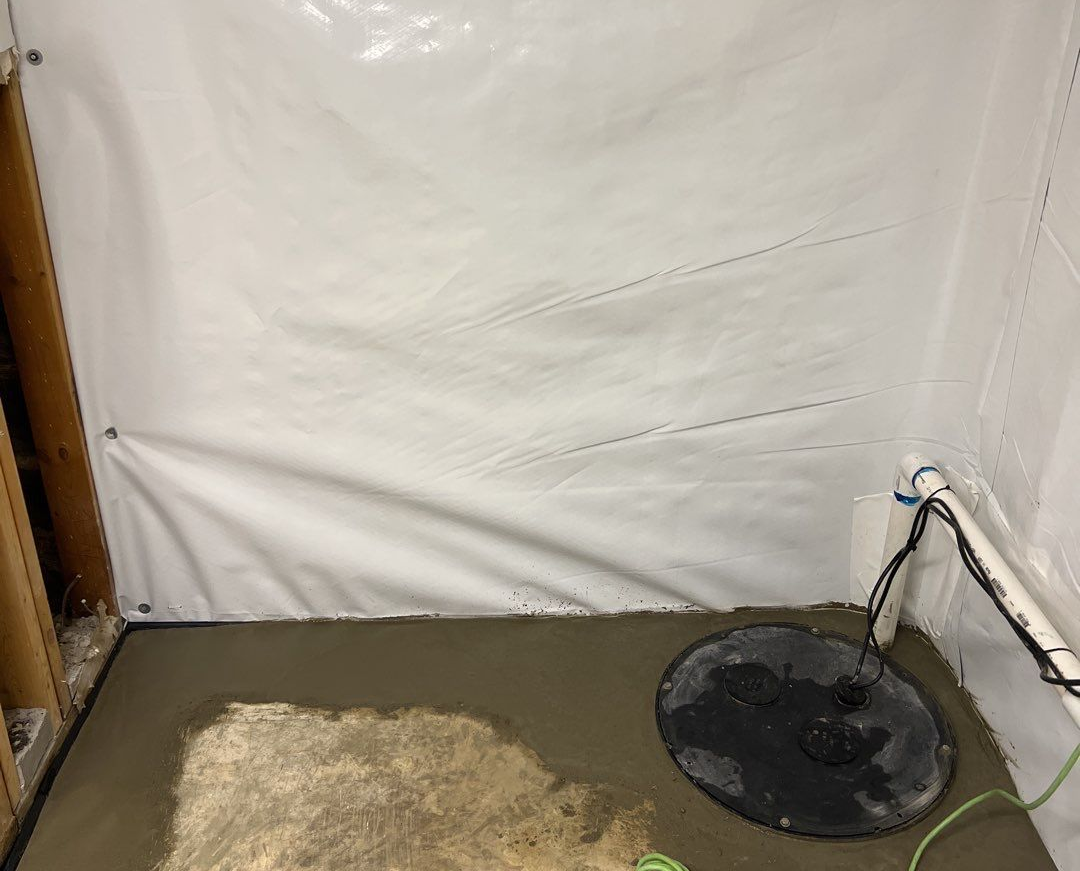
Excavation and reinforcement. For walls with more than 2 inches of displacement or walls with structural failure, the exterior approach involves excavating to the footing, removing the lateral pressure source, applying a waterproofing membrane to the wall face, installing a drainage board and backfilling with granular material rather than the original clay soil. In cases of severe failure, the wall section is reconstructed. Costs run $15,000 to $30,000 or more depending on extent of damage and perimeter length.
What Does Not Fix a Bowing Wall
Interior waterproofing drainage systems manage water entering the basement. They do not address lateral soil pressure or halt wall displacement. A drainage channel and sump pump is the correct companion to a structural repair after the wall is stabilized, not a substitute for stabilization.
Surface coatings and sealants applied to the wall face also do not address bowing. They block moisture from passing through the wall surface but provide no resistance to the lateral soil pressure causing the wall to move inward.
The structural repair comes first. Interior waterproofing is added after the wall is stabilized to manage any residual seepage through the repaired wall.
Bowing Wall Repair Cost Summary
Carbon fiber straps: $1,500 to $3,500 per wall section
Wall anchor system: $5,000 to $12,000
Excavation and reinforcement: $15,000 to $30,000+
Combination structural repair plus waterproofing: $8,000 to $20,000 depending on scope
For a full breakdown of waterproofing costs by system type, see How Much Does Basement Waterproofing Cost in Alabama?
Frequently Asked Questions
What is the difference between a bowing wall and a settling wall?
Settling cracks are vertical or diagonal, they result from the foundation sinking unevenly into the soil. Bowing is horizontal displacement caused by lateral soil pressure pushing the wall inward. Both conditions appear in Alabama foundations, but they require different repairs. Horizontal cracks indicate bowing. Vertical or diagonal cracks indicate settling. The FEMA guidance on foundation performance distinguishes lateral pressure failure from settlement failure as separate structural conditions requiring separate remediation. Either warrants professional evaluation in Alabama.
Can a bowing wall be pushed back to its original position?
Wall anchors, when periodically tightened over one to three years, can gradually restore a displaced wall toward its original position. Carbon fiber straps arrest movement but do not restore position. Excavation and reconstruction returns the wall to original alignment. The feasibility of restoration depends on how far the wall has displaced and how long it has been in the bowed position. Walls at 1 to 2 inches of displacement have the best restoration outcomes. Walls past 3 inches typically require reconstruction rather than recovery.
How fast does a bowing wall get worse in Alabama?
In Alabama's clay soil, most bowing walls advance 0.5 to 1 inch per year in displacement if left unaddressed. The rate depends on rainfall volume, drainage conditions around the foundation and the soil compaction around the perimeter. Homes in low-lying areas, near drainage corridors or with poor gutter management typically see faster progression. Alabama averages over 54 inches of rainfall annually, and the clay soil generates renewed lateral pressure after every significant storm event.
Is a bowing wall covered by homeowners insurance in Alabama?
Standard homeowners insurance in Alabama does not cover bowing walls caused by soil pressure or earth movement. Both are standard exclusions in most residential policies. Sudden structural failures from specific named events may be covered depending on the policy language. Confirm what your specific policy covers with your insurance agent. H2O provides written inspection reports and scope-of-work documentation for insurance purposes when relevant.
How do I know if my bowing wall needs immediate repair or monitoring?
Any wall with horizontal cracks, more than 1 inch of inward displacement at the midpoint or a visible lean at the top requires professional evaluation without delay. Walls with hairline horizontal cracks and no measurable displacement can be monitored quarterly with a string line and dated photographs. H2O's free inspection documents current displacement, identifies the rate of progression based on crack age and provides a repair recommendation with no obligation to proceed.
What happens if a bowing wall fails completely?
A bowing wall that fails structurally allows the soil outside to collapse against the foundation. The result is partial or complete collapse of the basement wall, which compromises the structural integrity of the floor system and walls above. Repairs at that stage require excavation, wall reconstruction and full foundation restoration at costs routinely exceeding $50,000. Addressing bowing at the 1-to-2-inch stage eliminates the failure scenario entirely.
H2O Waterproofing Repairs Bowing Walls Throughout Alabama
H2O Waterproofing has assessed and repaired bowing foundation walls in Alabama basements since 2003. BBB A+ rated. Free inspections with written estimates. Fully transferable lifetime warranty on all structural and waterproofing work.
Call (205) 956-2426 or schedule your free inspection online . Most inspections take about an hour and produce a written estimate the same day.
Search Post
Recent Posts


Share post