If you have gotten quotes for crawl space moisture control in Alabama, you have likely heard both terms: vapor barrier and encapsulation. Contractors use them interchangeably. They are not the same thing, and the difference determines whether your crawl space stays dry year-round or continues to produce mold, wood rot, and musty odors through every Alabama summer.
H2O Waterproofing has installed crawl space systems throughout Alabama since 2003. This is a direct explanation of what each system is, what each one does, and which one Alabama's climate actually requires.
What a Vapor Barrier Is
A vapor barrier is a sheet of polyethylene plastic laid on the ground of the crawl space. The most common thickness is 6 mil. It covers the soil to reduce moisture evaporation from the ground into the crawl space air. Building codes in Alabama require a ground cover in crawl spaces - a 6-mil vapor barrier satisfies that requirement.
A vapor barrier does one thing: it slows moisture evaporation from the soil beneath it. It does not seal the crawl space. It does not block humid outdoor air from entering through foundation vents. It does not prevent moisture from rising up the block walls. It does not address the stack effect that draws humid air from the crawl space into the living area above.
In a dry climate, a vapor barrier is adequate. Alabama is not a dry climate. Alabama averages over 54 inches of rainfall per year. Summer relative humidity across Jefferson, Shelby, and Talladega counties regularly exceeds 90%. In those conditions, a vapor barrier addresses roughly 30 to 40 percent of the moisture sources in a crawl space - the ground, while leaving the other sources completely unaddressed.
What Crawl Space Encapsulation Is
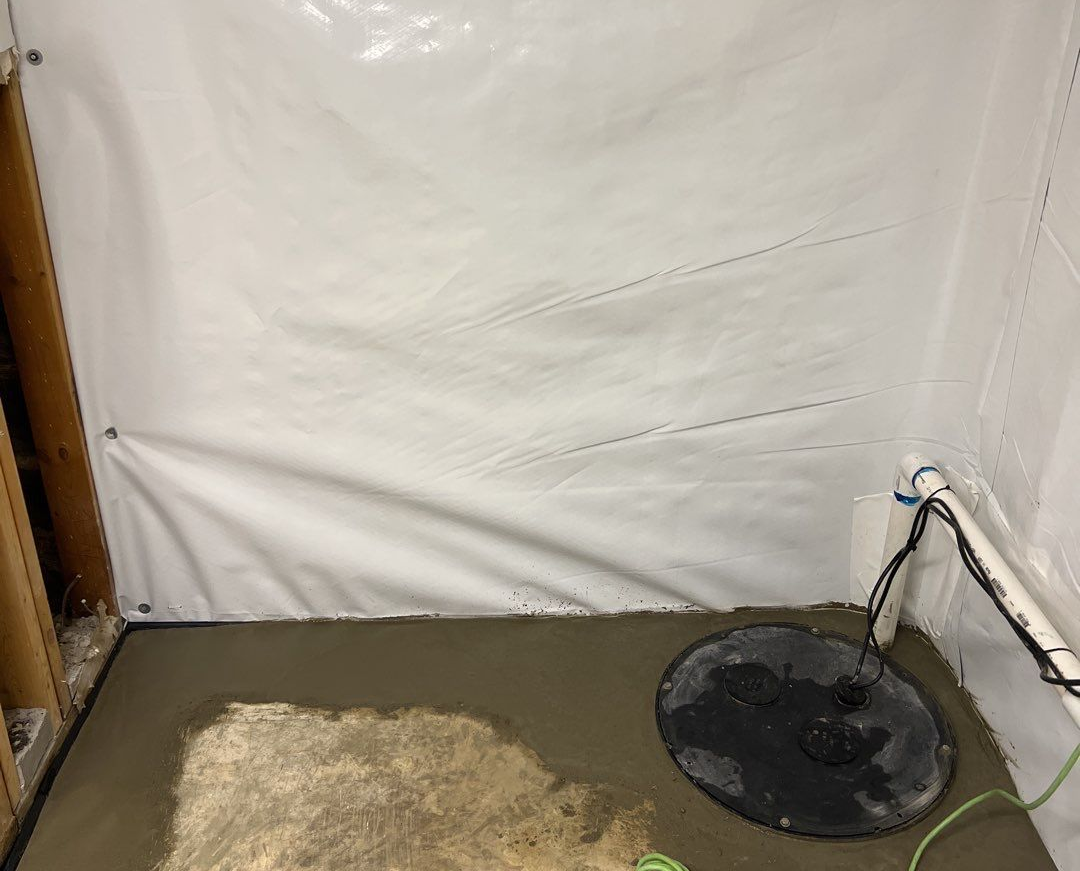
Crawl space encapsulation is a complete sealed system. It begins with a heavy-duty liner, typically 12 to 20 mil thick, installed across the entire crawl space floor and up the foundation walls to the sill plate. Seams are overlapped and taped. Penetrations around piers, pipes, and supports are sealed. The goal is to separate the crawl space environment from the exterior soil and exterior air entirely.
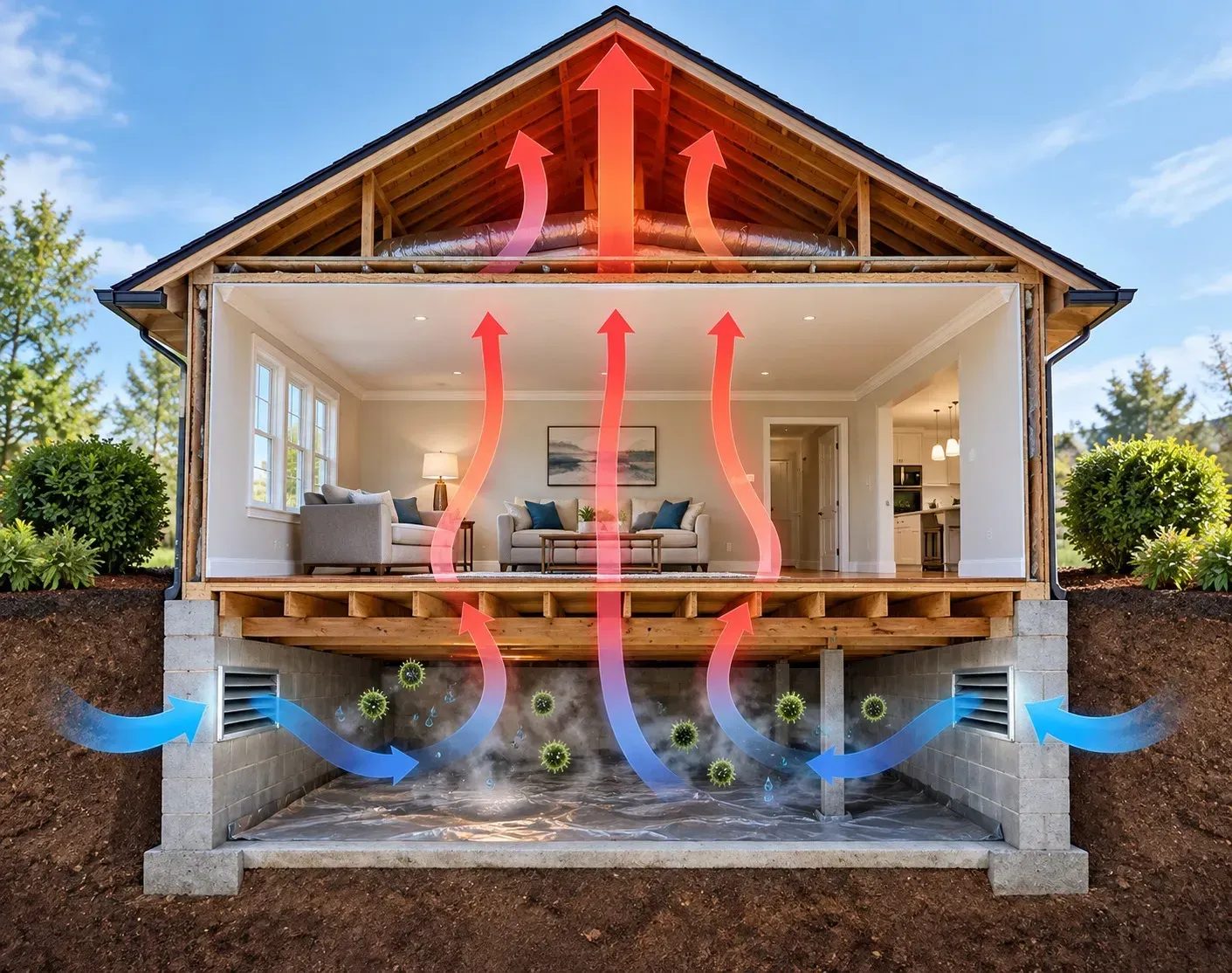
A complete encapsulation system also closes or conditions the foundation vents. Vented crawl spaces are the standard construction practice in Alabama, but they are counterproductive in a humid climate. During summer months, outside air at 85°F and 90% relative humidity enters the crawl space through those vents and contacts cooler crawl space surfaces. That air deposits its moisture directly onto the floor joists, insulation, and subfloor - exactly the opposite of what the vents were intended to accomplish.
After sealing the liner and addressing the vents, a dehumidifier is installed to manage residual humidity in the now-sealed space. The dehumidifier runs continuously as needed, maintaining the crawl space at 50% relative humidity or below regardless of outdoor conditions. Some systems also include a sump pump if groundwater drainage is needed.
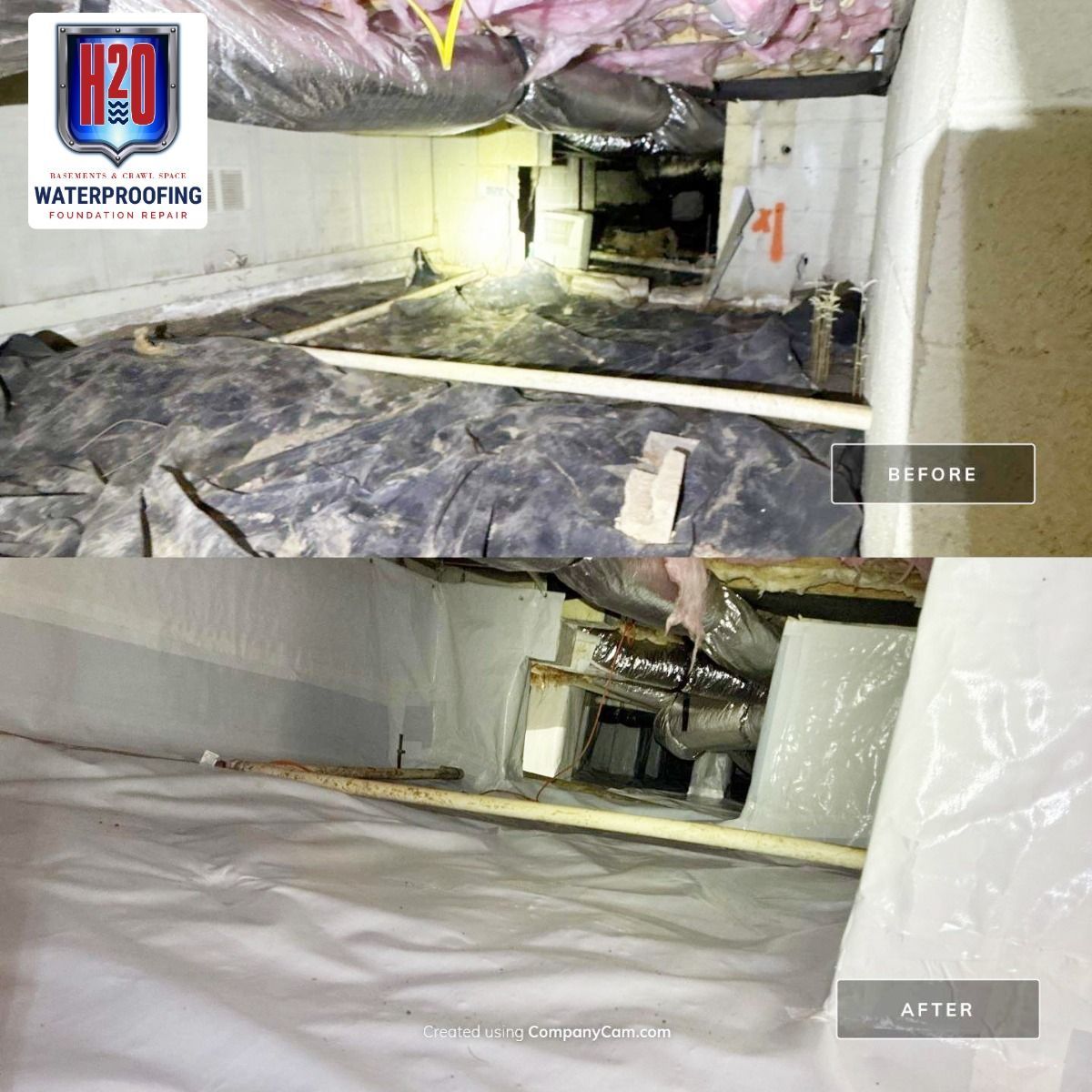
The result is a crawl space that functions as a dry, controlled environment — one that does not feed moisture into the framing above it or pull mold conditions into the living area through the stack effect.
Why the Difference Matters in Alabama
Alabama's red clay soil has a ground temperature of approximately 50 to 60°F year-round. When summer air at 85°F and high humidity enters a vented crawl space, it contacts surfaces at 55°F and condenses immediately. This is the same process that fogs a cold glass on a hot day, except it is happening continuously on your floor joists and subfloor for five to six months every year.
A vapor barrier does nothing to prevent this. The moisture is coming from the air, not the ground. Sealing the liner and managing the air with a dehumidifier is the only intervention that addresses condensation from the air side.
Alabama also experiences the stack effect: warm air rises through a structure and exits at the top, drawing replacement air in from below. In a vented crawl space, that replacement air is the humid outdoor air entering through the foundation vents. Every breath of air in your living space has passed through your crawl space first. If the crawl space air carries mold spores, humidity, or odor, those move into the home with it.
A 6-mil vapor barrier does not interrupt the stack effect. An encapsulated, dehumidified crawl space does.
Signs Your Crawl Space Needs Encapsulation, Not Just a Vapor Barrier
Musty odors in the living area. If your home smells musty in summer, especially on the ground floor or in rooms above the crawl space, the crawl space air is entering the living area. A vapor barrier will not resolve this.
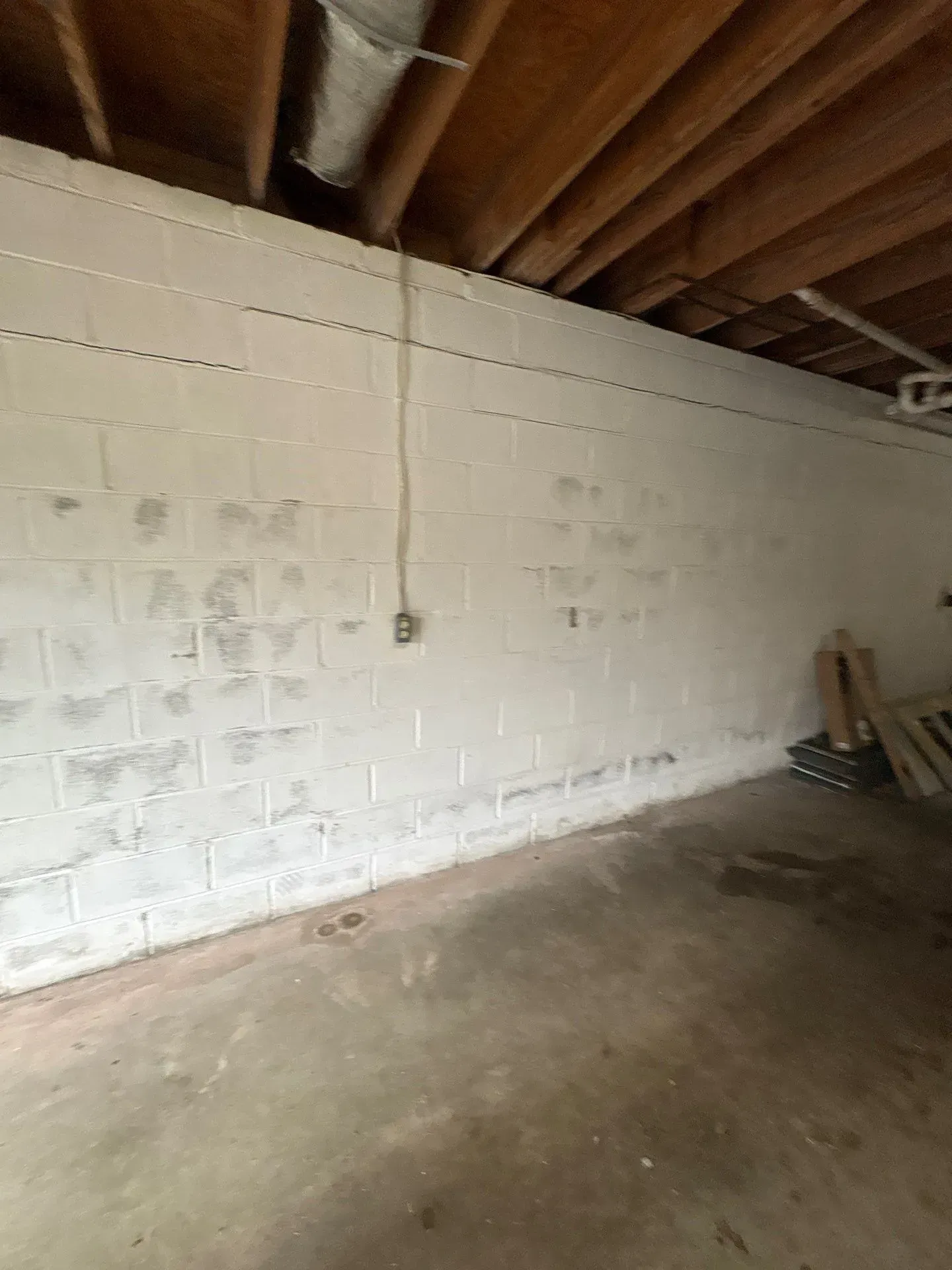
Visible mold or dark staining on floor joists. Mold on wood framing indicates moisture content above 19% in the wood. This level of moisture does not come from ground evaporation alone - it comes from condensation. Encapsulation and dehumidification are required to dry the wood and stop active mold growth.
Soft or bouncy floors. Subfloor softness above the crawl space indicates wood saturation and early structural degradation. This develops over years of repeated moisture exposure.
High humidity readings inside the crawl space. If a moisture meter placed in the crawl space reads above 70% relative humidity during summer, the space is in active mold territory. A vapor barrier cannot bring this number down.
Pest activity. Wood-destroying insects, termites, carpenter ants, wood-boring beetles are attracted to high-moisture wood. A consistently moist crawl space is a consistent pest attractant regardless of what ground cover is installed.
What H2O Installs: The Full Encapsulation System
H2O Waterproofing installs complete crawl space encapsulation systems, not vapor barriers. Every installation includes a heavy-duty liner covering the floor and walls, sealed seams and penetrations, vent management, and a purpose-built dehumidifier sized for the space.
The liner H2O installs is significantly thicker than the 6-mil polyethylene sold at hardware stores. Thicker liners resist puncture from foot traffic during maintenance visits, accommodate irregular terrain around piers and pipes, and maintain their integrity over decades rather than years.
Dehumidifiers H2O installs are Energy Star-rated commercial-grade units - WatchDog, Santa Fe, and Aprilaire systems built for sub-grade conditions. They drain automatically, operate at crawl space temperatures down to 40°F, and move 70 to 105 pints of moisture per day. A consumer dehumidifier placed in an Alabama crawl space will fail within one season. A purpose-built unit runs continuously for years.
If the crawl space has standing water or active drainage issues, H2O addresses those with a perimeter drainage channel and sump pump before the liner is installed. Installing a liner over an active water problem seals the problem in rather than solving it.
Cost: Vapor Barrier vs. Encapsulation in Alabama
A 6-mil vapor barrier installed by a contractor typically runs $0.50 to $1.00 per square foot, or $750 to $1,500 for a standard 1,500 square foot crawl space. It satisfies code minimum requirements and provides partial ground moisture control.
A complete encapsulation system - heavy liner, wall coverage, sealed vents, and a dehumidifier - runs $3,500 to $7,000 for a standard Alabama crawl space. Complex crawl spaces with standing water, structural repairs, or very low clearance run $6,000 to $10,000.
The relevant comparison is not the installation cost. It is the cost of what each system prevents. Wood rot repair for compromised floor joists and subfloor runs $4,000 to $15,000 depending on extent. Mold remediation in a crawl space runs $1,500 to $4,000. Pest damage from sustained moisture exposure adds additional costs. An encapsulation system installed before these problems develop is significantly less expensive than addressing them after.
H2O provides free, itemized estimates with no obligation. All encapsulation systems carry a fully transferable lifetime warranty.

Frequently Asked Questions
Is a vapor barrier required by Alabama building code?
Yes. Alabama's residential building code requires ground cover in crawl spaces. A 6-mil polyethylene vapor barrier satisfies this requirement. Encapsulation exceeds code minimum but is not required by code - it is required by Alabama's climate if the goal is an actually dry crawl space.
Do I need to close my crawl space vents for encapsulation to work?
Yes. Leaving foundation vents open after encapsulation defeats the purpose of the liner. Outside humid air entering through open vents continues to deposit moisture into the space regardless of what liner is on the ground. H2O closes or conditions the vents as part of every encapsulation installation. Closed-vent crawl spaces in Alabama consistently outperform vented crawl spaces on every moisture metric.
Can I encapsulate a crawl space that already has a vapor barrier?
Yes. H2O removes the existing vapor barrier, inspects the soil and framing beneath it, addresses any active drainage issues, and installs the full encapsulation system. An existing vapor barrier does not complicate the installation.
Will encapsulation stop mold that is already present?
Encapsulation stops the moisture that feeds mold growth. Existing mold must be remediated before or alongside the encapsulation installation - not after. Installing a liner over active mold seals in the spore load. H2O coordinates mold remediation and encapsulation on the same project when both are needed.
How long does crawl space encapsulation take in Alabama?
Most standard Alabama crawl space encapsulation projects complete in one to two days. Larger crawl spaces, spaces with very low clearance, or projects that include drainage work or mold remediation run two to three days. H2O provides a project timeline at the free inspection.
Does the dehumidifier need maintenance?
Yes. Filters should be cleaned every 30 to 60 days. H2O recommends annual system inspection to verify drain line function, confirm the unit is maintaining target humidity, and check liner condition. H2O's maintenance plan covers annual crawl space system inspection.
Schedule Your Free Crawl Space Inspection
H2O Waterproofing has installed crawl space encapsulation systems throughout Alabama since 2003. BBB A+ rated. Fully transferable lifetime warranty. Free inspections with no obligation.
Call (205) 956-2426 or schedule online to get a clear answer on what your crawl space actually needs.
Search Post
Recent Posts

Share post