Commercial waterproofing involves applying drainage systems, membranes, and moisture barriers to protect buildings from water intrusion. Water damage accounts for more than 50% of all commercial real estate insurance claims, with mean losses of $89,000 per claim. This guide covers the most common problems, proven solutions, and which commercial properties are most at risk.
Water doesn't send warning letters. It seeps through foundation cracks, migrates through porous concrete, and builds pressure against basement walls, often for months before anyone notices. By the time the damage is visible, the cost of repairs has already climbed well past what proactive waterproofing would have required.
According to the American Insurance Association, water leaks result in property losses exceeding $10 billion annually across the United States. Water damage claims represent more than 50% of all commercial real estate insurance claims, with a mean loss of $89,000 per claim (McGuire Manufacturing). And here's a critical detail that many building owners overlook: groundwater seepage and gradual moisture damage are frequently excluded from standard commercial property insurance policies.
That means the cost falls on you.
This guide covers everything commercial property owners and managers in Alabama need to know about waterproofing, from the root causes of water intrusion to the specific solutions that work for different building types.
What Is Commercial Waterproofing?
Commercial waterproofing is the application of drainage systems, membranes, and moisture barriers to commercial buildings to prevent water intrusion, protect structural integrity, and maintain a safe and habitable environment for tenants, employees, and occupants.
It applies the same core principles as residential waterproofing but at a larger scale, with added requirements around minimizing operational disruption, meeting commercial building codes, and protecting the property owner's long-term investment.
Commercial waterproofing applies to foundations, below-grade walls, basements, crawl spaces, and exterior perimeters. Any part of a building in direct contact with soil is subject to hydrostatic pressure and moisture infiltration.
What Are the Most Common Commercial Waterproofing Problems?
Why do so many older commercial buildings have water intrusion issues?
The most common issue H2O Waterproofing encounters in Alabama commercial properties is failed builder-grade dampproofing. Buildings constructed between the 1960s and 1990s were typically treated with an asphalt-based dampproofing coating rather than a true waterproofing system.
There is an important distinction between these two approaches:
Dampproofing uses a bituminous coating applied to exterior foundation walls. It resists soil moisture and water vapor under normal groundwater conditions, but it is not designed to withstand hydrostatic pressure. In Alabama's red clay soil, builder-grade dampproofing has a functional service life of roughly 10 to 15 years. Buildings in this age range that have not been re-waterproofed are operating on a degraded membrane.
Waterproofing provides a more robust system specifically engineered to prevent both water vapor and liquid water from penetrating below-grade structures. A complete commercial waterproofing system includes waterproof membranes, protection boards, drainage systems, specialized joint sealants, and footing drains. These systems are built to resist hydrostatic pressure and are required by building codes for foundations located below the water table.
How does water enter a commercial building foundation?
Water reaches commercial foundations through several mechanisms:
- Hydrostatic pressure: When saturated soil surrounds a foundation, water pressure builds against walls and forces moisture through cracks, joints, and porous concrete surfaces.
- Capillary action: Groundwater migrates upward through concrete's natural pores even without significant external pressure.
- Poor surface water management: Clogged gutters, misdirected downspouts, and landscaping that slopes toward the building concentrate water at the foundation.
- Foundation vulnerabilities: Construction joints, expansion joints, utility penetrations, deteriorated sealants, and existing cracks all serve as entry points.
What are the warning signs of water intrusion in a commercial building?
Watch for these indicators during regular inspections:
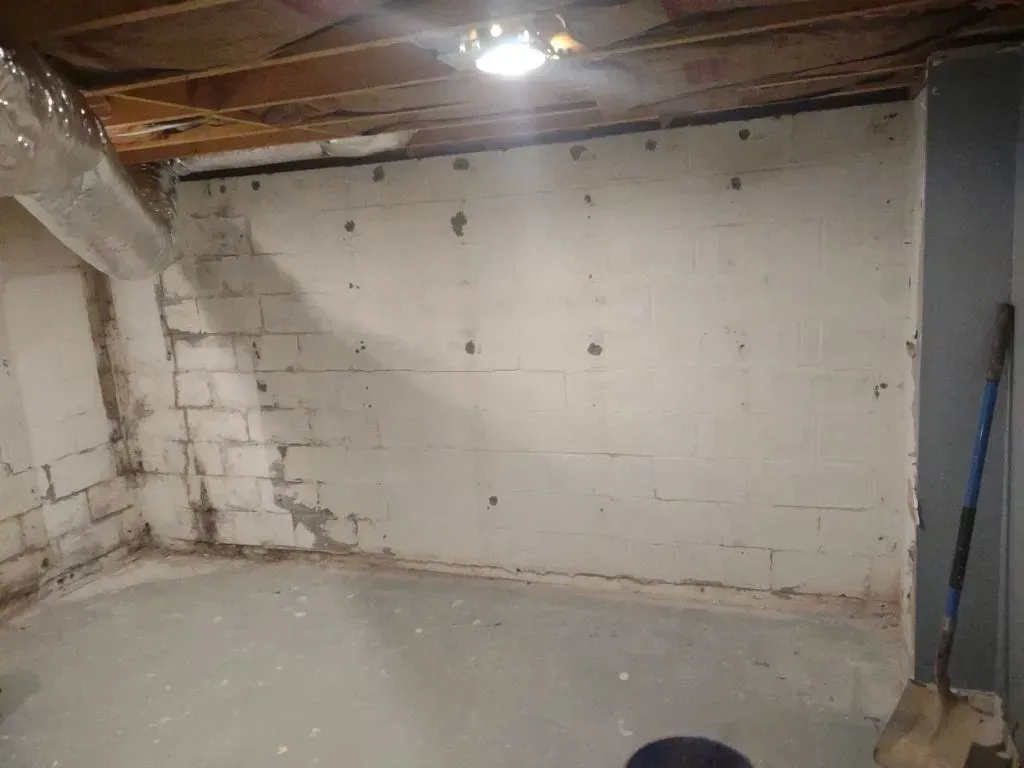
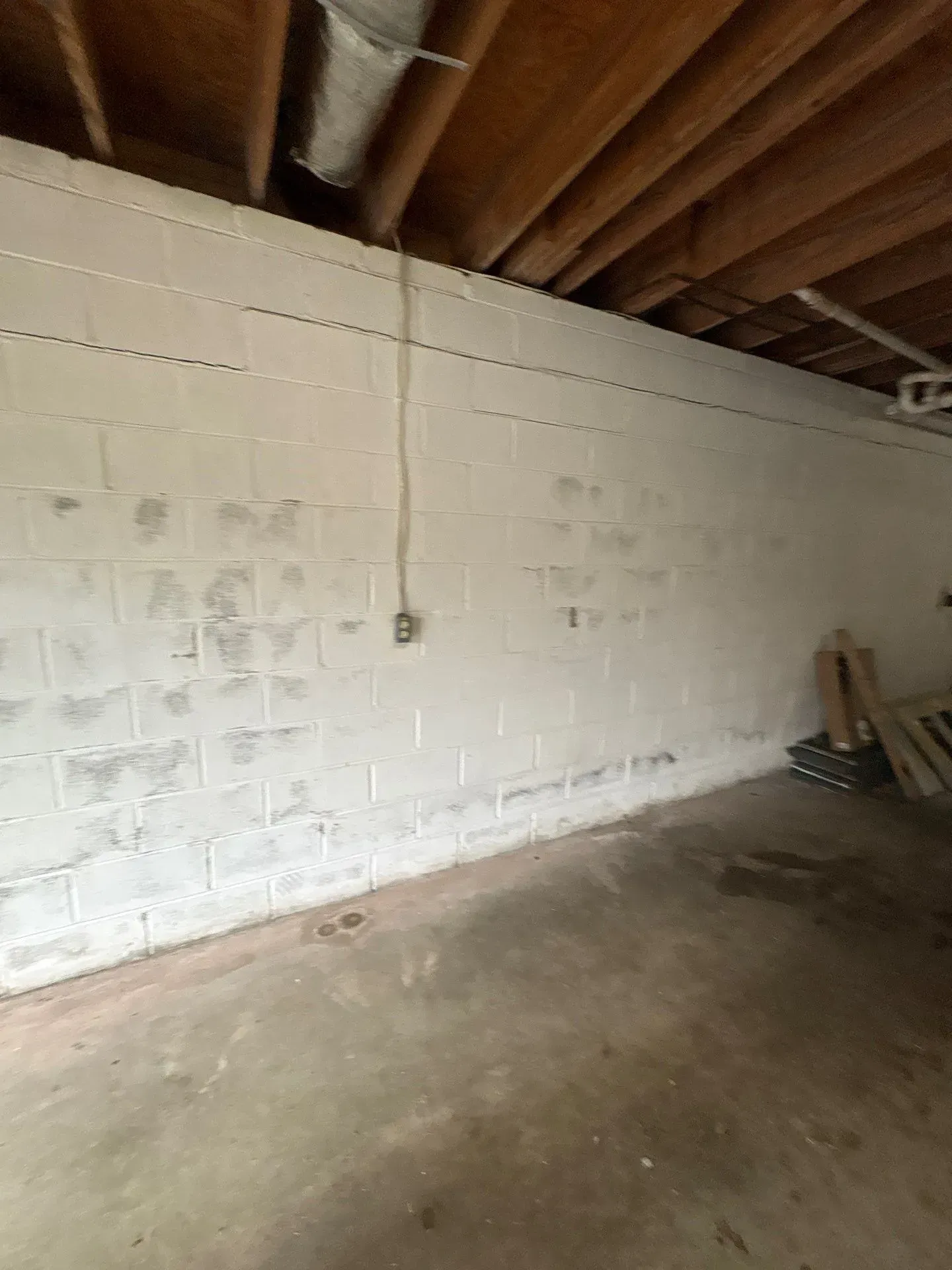
- Efflorescence: White, chalky mineral deposits on below-grade concrete or block walls confirm active water movement through the foundation.
- Recurring dampness: Persistent moisture or damp spots in basement areas, ground-floor offices, or storage rooms.
- Mold or mildew: Growth on walls, ceilings, or HVAC components. Mold in commercial HVAC systems distributes spores throughout the entire building.
- Flooring failures: Adhesive failure, tile lifting, or laminate buckling in the same location repeatedly signals slab moisture.
- Structural cracks: Horizontal or bowing cracks in foundation walls require immediate professional inspection.
- Water near mechanical equipment: Any intrusion near electrical panels, boilers, or mechanical systems is a direct safety and liability concern.
What Are the Best Waterproofing Solutions for Commercial Buildings?
Exterior Foundation Waterproofing (Positive-Side Protection)
Exterior waterproofing stops water before it reaches the foundation wall, making it the most effective long-term approach. This system applies a waterproof membrane to excavated exterior foundation walls, paired with drainage boards and perimeter footer drains to relieve hydrostatic pressure.
H2O Waterproofing applies GMX Ultra-Shield polymer-modified asphalt membrane to commercial foundation walls, a material that provides eight times the hydrostatic pressure resistance of standard builder-grade products. This is the preferred solution for new commercial construction and for buildings undergoing major renovation where exterior access is available.
Interior Drainage Systems (Negative-Side Protection)
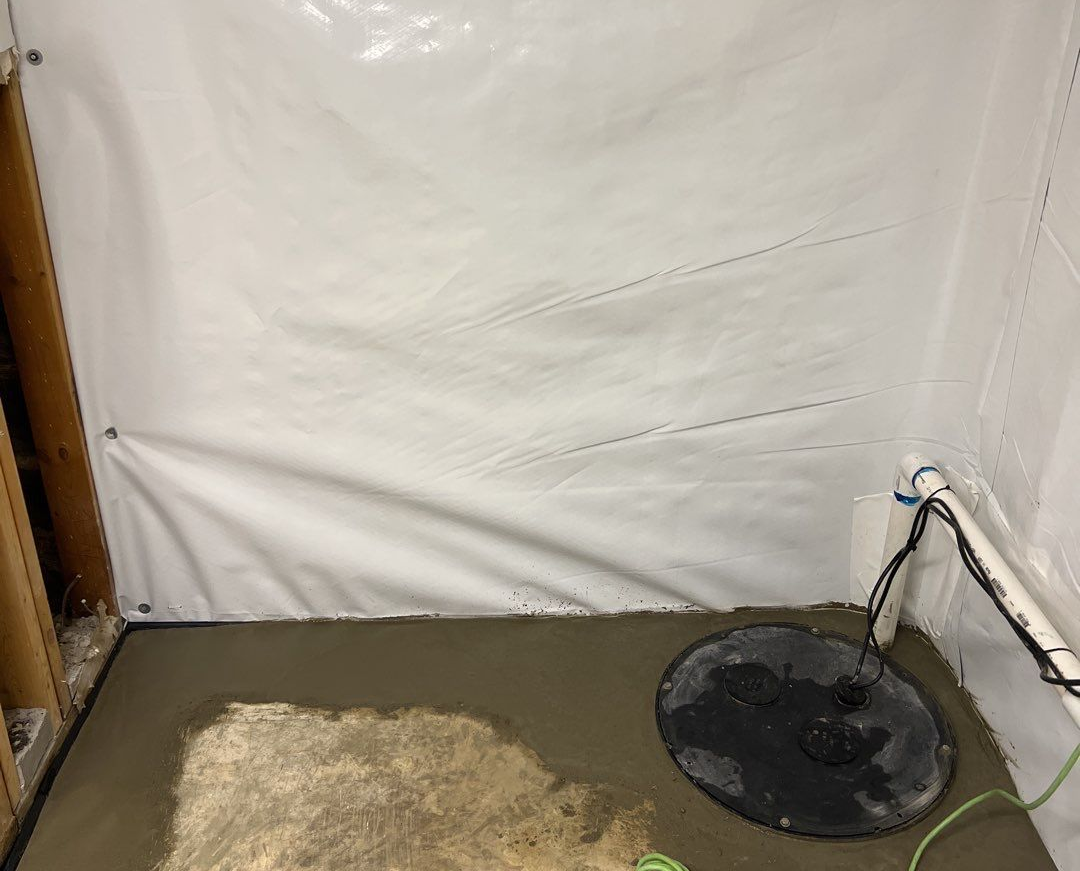
For commercial buildings where exterior excavation is not practical, interior drainage manages water after it enters the structure. A perimeter drainage channel is hammer-cut along the interior foundation perimeter, a drainage pipe is installed, and a commercial-grade sump system removes collected water.
Interior drainage and crawl space work typically do not require tenants to vacate or operations to pause, which makes this approach practical for occupied buildings.
New Construction Waterproofing
The most cost-effective time to install exterior waterproofing on a commercial building is during construction, before backfill. H2O Waterproofing works directly with general contractors and developers to waterproof foundations before the ground is closed. Buildings without adequate original waterproofing typically develop water intrusion problems within 10 to 15 years.
Which Types of Commercial Properties Need Waterproofing?
Any commercial building with a foundation, basement, or crawl space in contact with Alabama soil is a candidate for commercial waterproofing. H2O Waterproofing serves the full range of property types:
Apartment buildings and multi-family housing: Basement and crawl space moisture in multi-family buildings creates tenant complaints, mold liability exposure, and habitability issues.
Office buildings: Below-grade offices, server rooms, and storage areas require dry, stable environments to protect equipment and inventory.
Churches and houses of worship: Older church buildings with block foundation basements frequently develop water intrusion as original coatings age and degrade.
Schools and educational facilities: Mold and moisture in schools trigger health department concerns, air quality complaints, and potential regulatory action.
Industrial and warehouse facilities: Slab moisture and foundation seepage affect product storage, equipment performance, and worker conditions.
Retail and restaurant spaces: Ground-floor and below-grade retail spaces are vulnerable to moisture that damages flooring, affects air quality, and creates slip hazards.
Historic commercial buildings: Alabama has a significant inventory of older commercial buildings with aging masonry foundations that require specialist knowledge and appropriate materials.
Protect Your Commercial Property Before Water Damage Costs You More
Foundation water damage develops slowly and stays hidden. By the time mold appears on a wall or a tenant files a complaint, the problem behind it has been growing for months. Investing in professional commercial waterproofing protects structural integrity, supports business continuity, and reduces the significant liability exposure that comes with water intrusion in occupied buildings.
H2O Waterproofing has served Alabama commercial property owners, property managers, HOAs, churches, schools, and facility directors since 2003. Every commercial project is scoped by a licensed contractor, performed by technicians with a minimum of 10 years of hands-on experience, and backed by a fully transferable lifetime warranty.
Call (205) 956-2426 or schedule a free commercial property inspection online to get started.
What is the difference between dampproofing and waterproofing for commercial buildings?
Dampproofing is a bituminous coating that resists soil moisture and vapor under normal conditions but cannot withstand sustained hydrostatic pressure. Waterproofing is a more complete system, including membranes, drainage boards, and footer drains, engineered specifically to resist water pressure. Many commercial buildings built before the 1990s used dampproofing, which has likely reached or exceeded its service life.
Does commercial property insurance cover foundation water damage?
Not always. Groundwater seepage and gradual moisture damage are frequently excluded from standard commercial property insurance policies. Building owners who discover foundation water intrusion may face significant out-of-pocket repair and remediation costs. Proactive waterproofing reduces this financial exposure.
How long does a commercial waterproofing project take?
Timeline depends on scope and building size. A commercial interior drainage system for a single-section basement typically runs one to three days. Exterior foundation waterproofing for a larger commercial building runs three to seven days depending on linear footage and excavation depth. Commercial crawl space encapsulation is generally one to three days. H2O Waterproofing provides a specific timeline with every written estimate.
Can commercial waterproofing work be scheduled around tenant operations?
Yes. Interior drainage and crawl space encapsulation generally do not require tenants to vacate or operations to pause. Exterior foundation work may affect perimeter access during installation but does not disrupt interior operations. For offices, schools, restaurants, and other occupied buildings, H2O Waterproofing can schedule work during evenings and weekends.
How much does commercial waterproofing cost in Alabama?
Commercial waterproofing is priced based on the square footage or linear footage of the affected area, foundation depth, site access and scheduling constraints, and whether mold remediation or structural repair is needed first. H2O Waterproofing provides free, no-obligation inspections and itemized written estimates. Commercial financing options are available for larger projects.
Search Post
Recent Posts


Share post